
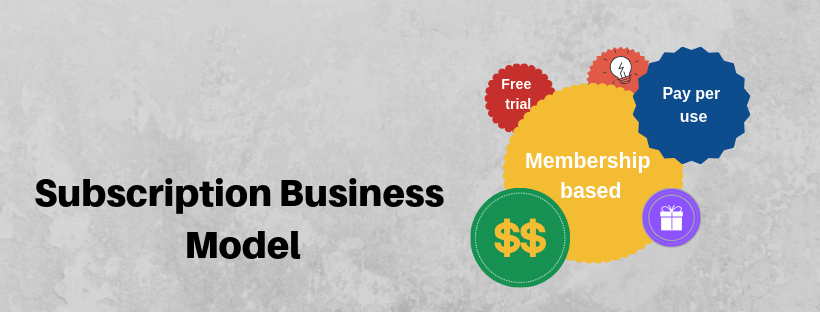
The modern economy has undergone a seismic shift. We have moved away from the singular, transactional nature of buying a compact disc towards streaming an infinite library of sound. We no longer purchase a single DVD but subscribe to a cinematic universe. This evolution is not limited to media; it spans software, daily meals, grooming products, and even car access. The dream of the entrepreneur has, for decades, been tied to the majesty of massive one-time launches and seasonal spikes. But the winds have changed. The true north of sustainable commerce now points toward the serene and steady hum of recurring revenue. The question is no longer merely how to sell a product, but how to maintain a relationship that pays dividends every thirty days. Building a Profitable Subscription-Based Business is not a matter of simple billing cycles; it is an intricate dance of psychology, logistics, value creation, and relentless trust-building. It requires a shift in mindset from a hunter, chasing the next big game, to a farmer, cultivating the soil so the crops regenerate season after season. This model demands that we treat every subscriber not as a wallet, but as a member of a community who has granted us a temporary, revocable trust that we must validate continuously.
To build this engine of predictable wealth, the entrepreneur must dig beneath the surface of vanity metrics like total subscriber count and focus intently on the health of the unit economics. The allure of recurring income is potent, often masking a churning underbelly where the cost to acquire a customer far outweighs the lifetime profit they generate. True mastery lies in the delicate equilibrium between acquisition velocity and retention depth. If the bucket has holes, pouring more water in will never fill it. Therefore, the architecture of a Profitable Subscription-Based Business begins with a deep introspection on the problem being solved. Is it a chronic, enduring pain that requires ongoing treatment? A fleeting inconvenience will not sustain a subscription; a deep-seated desire for convenience, growth, or peace of mind will. The entrepreneur must identify a promise that never expires, a result that requires perpetual maintenance, or a delight that is frequently consumed. Without this perpetual relevance, the subscriber sees the recurring charge not as a service, but as a tax they must optimize away. The journey from a fragile startup to a resilient subscription titan is paved with the delicate art of humanizing the intangible and making the routine feel extraordinary.
In this article
- The Psychological Architecture of Recurring Value
- Identifying the Evergreen Core and Niche Mastery
- The Surgical Economics of Acquisition and Churn
- Pricing for Profitability and Perceived Eminence
- The Ritual of the Unboxing and Digital Reveal
- Liquidity, Financing, and the Cash Flow Advantage
- From Customer Service to Success and Community
- The Infinite Loop of Long-Term Expansion
The Psychological Architecture of Recurring Value
Before a single line of code is written or a physical box is packed, the founder must understand the psychological contract being signed. A standard transaction ends when the credit card clears. A subscription begins at that moment. The customer is asking, “Will you be as good tomorrow as you were today?” This requires the business to move from satisfaction metrics to attachment metrics. People subscribe for two primary reasons: utility and identity. Utility is the rational software that organizes their data; identity is the fitness apparel that signals they belong to a tribe of high achievers. The most profitable businesses fuse these two elements, creating a habit loop where the absence of the service would cause a disruption in their daily flow or self-perception. Creating a Profitable Subscription-Based Business means engineering a “loss aversion” trigger—where the fear of losing the service outweighs the pain of the payment.
 Also readCould the Right Bathroom Vanities in Lawrence IN Make Your Bathroom More Functional?
This psychological stickiness is built through progressive onboarding. The first interaction must not be a tutorial on features; it must be a delivery of a “quick win.” If the promise is financial literacy, the subscriber must save their first $50 within days. If the promise is better skin, they must see a tangible glow within a week. This immediate value transfusion sets the hook. Following this, the entrepreneur must implement variable reward schedules, a concept borrowed from behavioral science. If the monthly box contains exactly the same type of items, the anticipation decays. Introducing curated surprises, exclusive digital content, or unlocking “members-only” status tiers keeps the brain’s dopamine pathways engaged. The relationship transitions from a supply contract to a treasure hunt. This is where the subscription becomes immune to price comparison. A spreadsheet cannot calculate the emotional value of anticipation, community status, or personalized curation, shielding the business from commoditization.
Identifying the Evergreen Core and Niche Mastery
The graveyard of failed subscriptions is populated by businesses that attempted to be everything to everyone. To build a durable, profitable model, the entrepreneur must be willing to polarize. You must choose a specific “starving audience” rather than a broad, disinterested crowd. A generic box of snacks struggles; a specifically sourced box of rare, sugar-free, artisanal Japanese tea snacks for keto enthusiasts thrives. The narrow focus does not limit the market—it dominates it. When defining the core offering, the entrepreneur must look for consumables, curiosities, or continuities. Consumables are items that physically run out, like razors or vitamins. Curiosities are items that satisfy a hunger for knowledge or trends, like deep-dive industry reports or niche fashion drops. Continuities are services that maintain a state of being, like website uptime, cloud storage, or access to a mentor.
The profitability hinges on the “Cost of Goods Sold” (COGS) ratio within these categories. A digital continuity product, such as Software-as-a-Service (SaaS), often generates gross margins of 80% to 90%, allowing massive reinvestment into acquisition. A consumable physical good, like a meal kit, might operate on 30% to 50% margins, requiring obsessive logistics optimization. To construct a Profitable Subscription-Based Business in the physical realm, the entrepreneur must engineer a “hero product.” This is the item within the curation that is impossible to buy cheaper elsewhere, often custom-made or white-labeled. By owning the manufacturing or proprietary formulation of this hero product, the business becomes a brand, not a reseller. This vertical integration protects margins from supplier price hikes and copycat competitors, creating a defensible moat around the subscription stream.
The Surgical Economics of Acquisition and Churn
The mathematics of this model are deceptively simple but brutally honest. Profitability is a race between Lifetime Value (LTV) and Customer Acquisition Cost (CAC). However, the silent killer is the “payback period.” If it costs you $40 to acquire a customer who pays $20 per month, you are negative for two months. If that customer cancels in month three, you have lost money. The bridge to safety is shortening the payback period. This can be achieved through an annual upfront plan, which instantly improves cash flow and locks in commitment, eliminating the risk of early churn. The discounted annual plan is not a sacrifice of revenue; it is a purchase of time—time to prove your value.
Churn is the gravity that pulls every subscription back to earth. There are two types: voluntary and involuntary. Involuntary churn, or “passive churn,” is the silent subscription killer. It results from credit card expirations, bank declines, and payment gateway friction. A sophisticated business employs a “dunning management” system, an automated sequence of polite, helpful emails that goes beyond “your card was declined.” A masterful system uses tools like account updaters and gentle reminders that frame the issue as a service failure—”We’ve been unable to deliver your benefits, please hold while we fix this for you”—rather than a demand for payment. This single tactic can recover up to 5% of recurring revenue that silently bleeds away.
Voluntary churn, the active cancellation, requires a defensive strategy. The cancellation flow must not be a dead-end. It should be an intelligent off-ramp. Presenting a “pause” button often saves a customer who is temporarily overwhelmed, traveling, or tightening their budget. If they insist on leaving, a well-crafted exit survey that asks, “What problem were you hoping we’d solve that we didn’t?” provides the qualitative gold necessary to harden the product. Finally, the “win-back” email sequence must not trigger immediately. A cold, dormant period of a few months, followed by an email highlighting the exact product features the user loved most (based on their historical usage data), is far more effective than generic discounts.
Pricing for Profitability and Perceived Eminence
Pricing a subscription is a strategic exercise in anthropology, not a simple spreadsheet formula of cost-plus. If you charge too little, you attract bargain-hunting customers with high churn rates and high support expectations, crushing profitability. If you charge too much without a justified “value wedge,” you starve the top of the funnel. The sweet spot for building a Profitable Subscription-Based Business is “value-based pricing.” This requires calculating the tangible economic impact for the customer. If the software saves a graphic designer ten hours a month, and their hourly rate is $50, the software creates $500 in value. Pricing at $49 a month is a no-brainer; it is a 10x return on investment.
The pricing architecture itself should be tiered. A three-tier structure (Good, Better, Best) is a classic psychological tool. The middle tier is almost always the “sweet spot” you intend to sell. The lower tier serves as a safety net for price-sensitive users who may upgrade later. However, the highest tier is the critical lever for profitability. It acts as a “value anchor,” making the middle price look exceptionally reasonable. This top tier should be luxurious, perhaps including direct one-on-one consulting, white-glove onboarding, or physical “prestige” items, capturing the high willingness-to-pay segment. A mistake many founders make is hiding the price. Unless you are an enterprise sales juggernaut, transparent pricing builds trust. “Opaque pricing” creates friction and skepticism, increasing the cost of acquisition through lost visitors who refuse to book a demo just to see if they can afford you.
The Ritual of the Unboxing and Digital Reveal
In a physical subscription business, the package is not a container; it is a media channel. The average doorstep box competes with a hundred marketing stimuli. If it arrives looking generic, the perceived value plummets, and the retention hook weakens. The interior design must trigger a “camera moment.” The tissue paper, the placement of the hero product, the fragrance, and the personalized note are not frivolous expenses; they are the highest-return marketing investment you will make. This sensory experience translates directly into social proof. A subscriber who films an unboxing video for their followers is providing the purest form of user-generated content, driving organic acquisition costs down to zero.
For digital subscriptions, the “reveal” happens in the software interface. The dashboard must change and grow with the user. A static dashboard communicates stagnation. A dynamic interface that celebrates milestones, displays streaks, or visually represents growth reinforces the progression of the user’s journey. If a user logs into a language learning app and sees a decaying streak, they resubscribe to protect their identity as a consistent learner. If a user logs into a business analytics tool and sees a stagnant graph, they leave. Building a Profitable Subscription-Based Business digitally requires this “bionic handshake”—a constant feedback loop that shows the user their own progress, attributing it directly to your platform.
Liquidity, Financing, and the Cash Flow Advantage
One of the most intoxicating, yet perilous, aspects of the subscription model is the inversion of the cash flow cycle. In traditional business, you spend money on inventory and labor, sell the product, and hope to recoup the cost plus profit later. With subscriptions, customers pay you before you deliver the full lifetime value. This creates a pool of “deferred revenue” that acts as an interest-free loan from your customers. This capital can fuel growth, R&D, and infrastructure. However, ethical and profitable management demands treating this cash with discipline. It is not revenue earned until the service is delivered. Profitable operators build a “buffer stock” of this cash, recognizing that a sudden spike in churn or refund requests could create a liquidity crisis if the cash has been spent on lavish growth experiments. Using this float to automate systems, rather than just buying ads, builds a durable fortress against competition.
This predictable revenue stream is highly attractive to financial partners, but the entrepreneur must shift the language from vanity to unit economics to secure favorable terms. Traditional banks understand assets; subscription businesses run on data. The key metric for securing growth capital or a favorable loan facility is the “net dollar retention” (NDR). An NDR above 100% means that expansion revenue from existing customers (upgrades, cross-sells) outweighs the lost revenue from churn. It demonstrates that your customer base, in isolation, is growing in value without a single new customer being added. This is the hallmark of a truly Profitable Subscription-Based Business. It proves that the product has a gravitational pull so strong that customers expand their relationship naturally, making the business a safe bet.
From Customer Service to Success and Community
A subscription is a relationship that is billed, and relationships require a heartbeat. The function of support cannot be a cost center; it must be a profit center in disguise. This is the realm of Customer Success (CS). While support fixes bugs, success achieves outcomes. The CS team proactively monitors usage. If a high-value subscriber has not logged in for two weeks, a trigger should fire. An email that says, “We noticed you haven’t checked your dashboard—did you get stuck on the data import? I’ve attached a one-minute video I made just for you,” is a retention miracle. This level of care is not scalable through humans alone. It requires a hybrid system of automation, AI-driven personalization, and human empathy. The technology identifies the anomaly; the human writes the message. This combination signals to the subscriber that they are not an anonymous ID; they are a partner.
Community is the ultimate cement. When you lock a user into a relationship with other users, you achieve an unbreakable stickiness. A person may cancel a software tool if they find a cheaper alternative, but they will think twice about leaving a network of peers who provide them with support, jobs, and inspiration. Fostering this community through private forums, live coaching calls, and member spotlights creates a switching cost that no competitor’s feature set can overcome. The business transforms into a “social identity badge.” The profitability of such a community is explosive because the members themselves create the content, answer support questions, and onboard new users, drastically reducing the operational overhead required to maintain service quality.
The Infinite Loop of Long-Term Expansion
Once the core membership base is stable and the net dollar retention is solidly above 100%, the entrepreneur faces the next frontier: expansion. This is not about adding random features; it is about deepening the share of wallet. This can be achieved through a “complete the set” philosophy. If the core subscription is a productivity software, expansion comes from a companion mobile app, exclusive templates, or a physical planner that syncs digitally. Each expansion layer should be designed not just to increase average revenue per user (ARPU) but to eliminate the need for the customer to use a competitor’s tool.
Ultimately, the most powerful moat a subscription business can have is the “data moat.” The longer a user stays, the more data they entrust to your system—their preferences, their history, their customized settings, their saved content. Switching becomes a massive project of rebuilding their environment. A smart business amplifies this by making the data portable and visual. Show them their history map, their annual summary, their “year in review.” These nostalgic artifacts aren’t just features; they are concrete proof of the life they’ve built inside your ecosystem. The cost of replacing that history becomes so psychologically high that even a cheaper, technically superior competitor cannot tempt them to leave. Building a Profitable Subscription-Based Business in the modern era is ultimately a campaign to become the infrastructure of the customer’s daily life, a utility so critical and personal that its cancellation feels like an act of amputation, not a budgeting decision. It is the relentless pursuit of becoming indispensable, one billing cycle at a time.
