
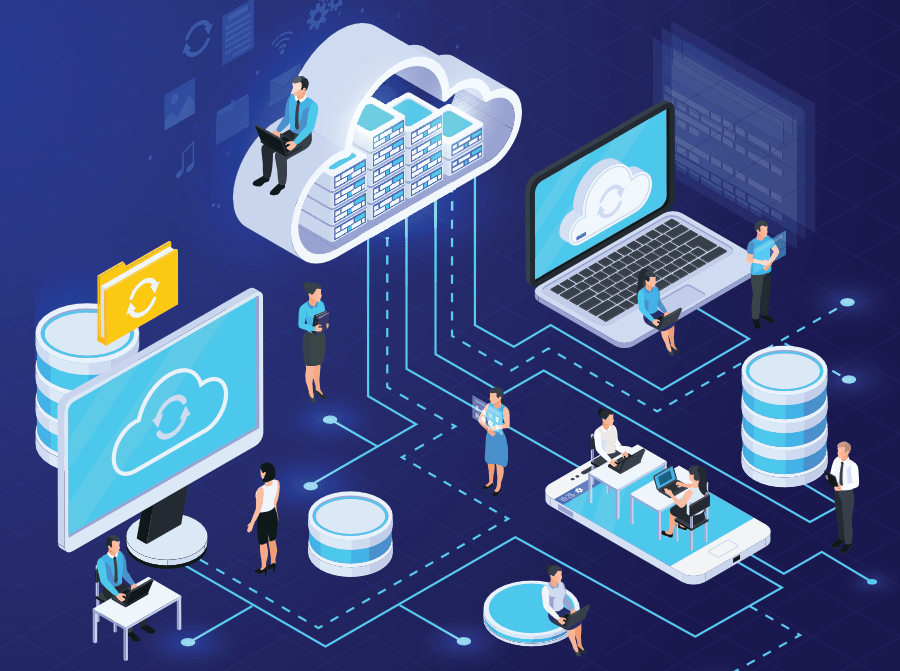
The way companies function has undergone a dramatic transformation over the past decade. Walk into any thriving enterprise today, from a small creative studio in a suburban neighborhood to a multinational corporation with offices spanning continents, and you will witness a common thread binding their daily activities. The reliance on physical file cabinets stuffed with paper, massive on-site server rooms humming with cooling fans, and software discs carefully stored in drawers has faded into a distant memory. In their place stands a model that is agile, interconnected, and remarkably efficient. This model is defined by Cloud-Based Operations, a foundational shift that is no longer a futuristic concept but a present-day reality driving competitive advantage. The migration we are witnessing is not a fleeting trend pushed by technology vendors. It is a fundamental rethinking of how resources are managed, how teams collaborate, and how value is delivered to customers. Businesses are moving away from the constraints of physical hardware and rigid local networks, choosing instead the freedom and intelligence offered by the cloud.
Understanding this massive transition requires a deep look into the pressures facing modern enterprises, the tangible benefits realized after migration, and the cultural shift that occurs when a business untethers itself from a fixed location. The conversation around Cloud-Based Operations often begins with cost savings, but as we will explore, the financial aspect is merely the entry point. The real substance lies in resilience, the democratization of advanced technology, and the ability to act on data instantly. The global health events of the early 2020s served as a harsh stress test for business continuity. Organizations that had already embraced cloud infrastructure transitioned to remote work smoothly, while those bound to legacy on-premise systems struggled to survive. This period was a turning point, proving definitively that operational agility is not just a luxury for tech companies; it is a vital component of survival in any industry, from agriculture to financial services and beyond.
In this article
- Tracing the Roots of a Digital Revolution
- Redefining the Economics of Modern Enterprise
- Elevating Collaboration Beyond Physical Walls
- Fortifying Data and Simplifying Security
- Dynamic Scaling and the New Logic of Growth
- Unlocking Intelligence Through Integrated Data Analytics
- Facilitating True Business Continuity and Organizational Resilience
- Cultivating a Sustainable and Responsible Operational Footprint
- Exploring the Boundaries of Edge Computing and Distributed Intelligence
- Streamlining Compliance and Governance in a Complex Regulatory World
- Navigating the Challenges and Cultivating a Cloud-First Culture
- The Horizon: Continuous Evolution as a Strategic Imperative
Tracing the Roots of a Digital Revolution
To appreciate where we are heading, it is helpful to understand how we arrived here. Long before the term became a boardroom buzzword, the conceptual seeds of shared computing resources were being planted. The idea that computing power could be delivered as a utility, much like electricity or water, has been around for decades. Early mainframe computers operated on a model of time-sharing, where multiple users accessed a central system’s power without owning the physical machine outright. This philosophy lay dormant in the mainstream business world for years, constrained by the limitations of network speed and hardware costs. The internet boom of the late 1990s brought connectivity to the masses, but it was the stabilization of high-speed broadband and the advent of virtualization technology that truly cracked the code. Virtualization allowed a single physical server to act as multiple independent machines, maximizing efficiency and slashing the cost of entry for complex computing.
 Also readCould the Right Bathroom Vanities in Lawrence IN Make Your Bathroom More Functional?
This technological breakthrough birthed the infrastructure that supports Cloud-Based Operations today. Companies no longer needed to buy a server for every single application; they could rent slices of a massive, professionally managed data center located hundreds of miles away. This shift created a new economic model. It transformed capital expenditure, the heavy upfront cost of buying equipment, into operational expenditure, a predictable, recurring payment. For a small start-up, this meant they could launch a software product to a global audience without building a private data center. For a large enterprise, it meant they could experiment with new ideas without risking millions on hardware that might become obsolete in two years. The barrier to innovation plummeted. As this infrastructure matured, the layers of service expanded. Today, the landscape encompasses everything from raw computing power and storage to fully managed software platforms that handle security updates automatically. This spectrum allows a business to choose its level of control and responsibility, tailoring the cloud environment precisely to its regulatory and technical requirements.
Redefining the Economics of Modern Enterprise
When a financial director analyzes the shift toward cloud-based models, the initial lens is invariably one of cost. The traditional model of maintaining an on-premise data center is punishingly expensive when viewed holistically. The price tag is not limited to the initial purchase order for server racks and networking switches. It extends to the physical square footage required to house them, real estate that often demands specialized flooring, fire suppression systems, and climate control that runs twenty-four hours a day. A significant portion of a building’s energy consumption can be traced back to keeping these machines cool and preventing thermal failure. Beyond the infrastructure, the human capital required is substantial. Highly skilled engineers must be employed to patch firmware, replace failed hard drives, manage power backups, and maintain physical security. These are critical tasks, but they do not directly differentiate the business in the marketplace. They are maintenance burdens, heavy costs that do not generate revenue.
Cloud-Based Operations restructure this financial equation completely. By migrating to a cloud provider, a business effectively transfers the burden of physical maintenance and real estate management to a specialized entity that operates at a scale impossible for a single company to achieve. Cloud providers aggregate demand across millions of clients, achieving economies of scale that drive down the unit cost of computing and storage relentlessly. This creates a pricing environment where a business pays strictly for what it consumes. If a retail company experiences a massive surge in web traffic during a seasonal sale, it can provision extra capacity for those specific hours and release it immediately after, paying only for the peak window. In a traditional data center, that company would have to purchase enough hardware to handle the peak load, leaving that expensive equipment idle for the remaining eleven months of the year. This pay-as-you-go precision eliminates waste and frees up capital for investment in human-centered design, research, and customer acquisition.
The conversation around cost often leads to a deeper financial benefit that is less discussed: the value of agility. The ability to enter a new geographic market without physically shipping servers and hiring local IT staff changes the calculus of global expansion. A team can deploy an application in a data center located in a new region with a few commands, minimizing the risk associated with international growth. This economic agility is a direct contributor to top-line revenue, as it shortens the time between ideation and market capture. The financial argument for the cloud, therefore, is not solely about reducing the IT budget; it is about transforming IT spending from a fixed, heavy anchor into a variable, flexible engine that accelerates strategic business moves. The conversation shifts from “how much can we save on our electric bill?” to “how fast can we capture a new market segment?” This reorientation of financial resources is a primary catalyst driving the ongoing migration.
Elevating Collaboration Beyond Physical Walls
The nature of work has been fundamentally redefined by the dissolution of spatial boundaries. There was a time when a critical project stalled simply because a key decision-maker was traveling, and the updated file sat stranded on their desktop hard drive in a locked office. That reality feels archaic today. Cloud-based platforms have woven a digital fabric that connects a workforce regardless of whether they are sitting in a corporate high-rise, a home office, or a café in a different time zone. A document created in a cloud environment does not exist as a static attachment sent through email chains; it exists as a living, breathing entity with a single source of truth. When a marketing analyst in London adjusts a data model, the sales director in Dubai sees the updated projection instantly. This synchronous environment destroys the latency of the old “edit, save, attach, send, wait” cycle, compressing project timelines and reducing the friction that leads to version-control errors.
The tools that power this collaborative sphere have evolved far beyond simple file storage. They now encompass integrated communication channels, video conferencing bridges, and digital whiteboards that persist indefinitely. A project meeting no longer requires the physical booking of a conference room and the logistical nightmare of aligning schedules for a transatlantic flight. It is a fluid, ongoing conversation that spans days or weeks, documented and searchable within a unified platform. This persistent collaboration is particularly beneficial for industries dealing with complex, multi-stakeholder projects such as architecture, engineering, and software development. Design changes can be reviewed, annotated, and approved in real-time by a distributed team, slicing weeks off review cycles. The removal of communication silos fosters a culture of transparency. Tasks, deadlines, and bottlenecks become visible to everyone involved, which increases accountability across the board. When a business chooses to operate its core tools in the cloud, it is not just buying software; it is implementing a policy of radical visibility. The water-cooler conversation is replaced by a persistent digital thread that captures insight and context, ensuring that institutional knowledge is not lost when an employee walks out the door. This resilience in the face of staff turnover preserves operational momentum and protects the collective intelligence of the organization.
Fortifying Data and Simplifying Security
A persistent myth that follows the discussion of cloud migration is the fear of compromised security. For many business owners, the idea of handing sensitive data to a third party feels counterintuitive. The mental image of data being “out there” can seem less safe than data locked inside a physical room on a private server. However, a rational analysis of the threat landscape reveals why Cloud-Based Operations often represent a significant upgrade in security posture, particularly for small and medium-sized businesses that lack the resources to build a comprehensive cyber-defense team. The leading cloud infrastructure providers operate under a shared responsibility model. Their side of the bargain involves securing the foundational physical facilities: the concrete, the steel, the power grid, and the physical destruction of decommissioned hard drives. These are fortresses with biometric scanners, round-the-clock armed guards, and bullet-resistant barriers, a level of physical security that no standard business office can match. Their side also includes the hardening of the hypervisor layer that runs the virtual machines, defending against attacks that seek to escape one client’s environment and trespass into another.
The business’s side of the shared responsibility model involves configuring their own cloud environment securely, managing identity access, and encrypting data in transit and at rest. The cloud tools available for this task are deeply sophisticated. They allow for granular permissions, where a developer can provision a database but cannot read the credit card fields within it. They enable automated threat detection systems that scan for anomalous patterns, such as a login attempt from a suspicious geographic location, and block it before a human administrator even wakes up. The automation of security is a critical differentiator. In a traditional setup, a system administrator might apply a critical security patch days after a vulnerability is announced, leaving a window of exposure. In a managed cloud environment, patches can be applied globally and instantaneously, shrinking the attack surface in real time. Furthermore, the data durability offered by cloud storage is unmatched. The automatic replication of data across multiple isolated physical locations within a region ensures that even a catastrophic fire or earthquake does not destroy a company’s digital assets. The reality for many businesses is that the biggest threat to their data is not a sophisticated nation-state hacker, but a leaky pipe in the office ceiling or a disgruntled employee walking off with an unencrypted backup tape. Cloud-Based Operations engineer these mundane and devastating risks out of existence, replacing hope with automated, verifiable resilience.
Dynamic Scaling and the New Logic of Growth
The static capacity planning of the pre-cloud era was a gamble. A company launching a new product had to predict its success months in advance. Buying too little infrastructure meant the launch collapsed under the weight of traffic, turning a success story into a public relations nightmare of slow loading screens and frustrated customers. Buying too much meant sinking precious capital into servers that gathered dust, burning budget that could have been used for marketing. This binary risk has been dismantled by the elasticity inherent in the cloud. The concept of scaling on demand is arguably the single most important technical characteristic of cloud architecture. It replaces guesswork with real-time responsiveness. An e-commerce platform running on cloud infrastructure does not panic during a flash sale. The monitoring systems detect the influx of traffic, trigger automated rules to spin up additional application instances, and seamlessly distribute the load in a matter of seconds. The customer remains blissfully unaware of the computational gymnastics occurring behind the scenes, simply enjoying a smooth checkout process.
This elastic scaling is not limited to front-end web traffic. It applies to every component of a modern application stack. A video rendering service can provision thousands of high-powered computing cores for a complex special effects shot and de-provision them the moment the render is complete, paying only for the exact minutes used. A biotech firm analyzing a massive genetic sequence can harness enough memory to fit the entire dataset into RAM, reducing a process that once took weeks to a few hours, all without permanently owning a supercomputer. This capability fundamentally changes the nature of innovation. It lowers the cost of failure to almost zero. A team can spin up an experimental environment to test a wild new feature, collect user feedback, and destroy the environment if it fails, with a total financial outlay of perhaps a few dozen dollars. This encourages the rapid prototyping that is essential for disruption. When resources are infinite and instantly available, the bottleneck shifts from hardware capacity to human creativity. Companies that thrive in this environment are those that internalize the logic of dynamic scaling: the understanding that growth should be absorbed gracefully, not feared as a technical crash.
Unlocking Intelligence Through Integrated Data Analytics
Every interaction a business has with the world generates a data point. A click, a phone call, a sensor reading from a delivery truck, a swipe of an access card. For years, this data was exhaust, a byproduct of operations that was simply logged and forgotten, stored in isolated silos that served no strategic purpose. The transition to cloud ecosystems has catalyzed a shift where data is no longer a burdensome record-keeping requirement but a raw material of immense value. The cloud’s architecture naturally centralizes data streams from disparate sources into accessible lakes and warehouses. It breaks down the walls between the sales database, the customer support ticketing system, and the social media monitoring tool, bringing them into a single analytics platform. This unification is the prerequisite for turning data into actionable intelligence. A business leader no longer needs to request a report from the IT team and wait days for a static spreadsheet. They can interact with a live dashboard that streams real-time operational metrics, revealing trends as they happen.
The true acceleration in this space comes from the integration of machine learning and artificial intelligence services that are native to the major cloud platforms. The democratization of these advanced computing sciences is one of the most compelling narratives of the current era. A small online retailer cannot hire a PhD in data science to build a custom recommendation engine from scratch. However, that same retailer can use a cloud-based machine learning service to analyze purchase history and generate personalized product suggestions with a few API calls. This levels the playing field in a staggering way. The intelligence that was once the exclusive domain of trillion-dollar tech giants is now available as a utility. A logistics company can utilize real-time route optimization algorithms that factor in weather and traffic, slashing fuel costs and delivery times. A maintenance firm can analyze vibration data from factory machinery sensors to predict component failure days before a breakdown halts production. These applications are not speculative science fiction; they are existing, catalogued services that turn Cloud-Based Operations into a competitive brain. The cloud becomes the medium through which a business becomes not just a reactive service provider, but a predictive, intelligent partner to its customers.
Facilitating True Business Continuity and Organizational Resilience
The stark vulnerability of localized operations becomes frighteningly clear during a disaster. A fire, a flood, or a prolonged power outage can physically destroy an on-premise server room, taking with it years of financial records, intellectual property, and client data. Even a less dramatic event, such as a backhoe cutting a single fiber optic cable during road construction, can paralyze a business that relies on a local network without a redundant infrastructure plan. The traditional solution to this was an expensive off-site disaster recovery data center, a mirror image of the primary site that sat idle and consumed capital strictly for the worst-case scenario. For the vast majority of businesses, such a setup was a cost-prohibitive dream. Cloud-Based Operations fundamentally alter the calculation of business continuity by baking geographic redundancy into the most basic service tiers. The leading providers partition their global infrastructure into regions, and within those regions, isolated groupings of data centers called availability zones.
Deploying critical applications across multiple availability zones means a business’s operations survive the literal explosion of a single data center seamlessly. The failover is automated, often without any noticeable disruption to the end-user. The data is replicated synchronously, ensuring zero loss. This level of resilience, once the domain of only the most critical national infrastructure, is now accessible to a start-up with a modest monthly budget. The business continuity benefits extend beyond physical disasters to encompass human and political events. With a workforce enabled by virtual desktop infrastructure and cloud-based communication tools, a company can continue to function during a snowstorm that shuts down physical commuting, or a regional health crisis that necessitates quarantine. The operations become untethered from a specific postal address. This is not merely about surviving a crisis; it is a strategic advantage in maintaining trust. When a competitor’s shop goes dark due to a local event, a cloud-enabled business continues to serve its customers, ship orders, and respond to inquiries, capturing market share through sheer reliability. The investment in cloud migration, in this light, is an investment in the durability of the brand promise, ensuring that external chaos does not translate into internal paralysis.
Cultivating a Sustainable and Responsible Operational Footprint
The environmental impact of business technology is under increasing scrutiny from regulators, investors, and consumers. The energy consumption of a private corporate data center is notoriously inefficient. These facilities are often over-provisioned to handle theoretical peak loads, leading to a vast army of servers running at low utilization, consuming electricity and generating heat that requires even more energy for cooling. This cycle of waste is a direct consequence of isolated, unshared infrastructure. The migration to hyperscale cloud data centers introduces a starkly different energy profile. A cloud provider’s data center operates at a scale where every efficiency gain is multiplied across tens of thousands of machines. They design custom silicon and cooling systems that slash energy use. They employ machine learning to monitor thermal conditions and adjust cooling dynamically in real time, a level of fine-tuning that a corporate IT closet can never achieve.
Furthermore, the multi-tenant nature of Cloud-Based Operations eliminates the gross inefficiency of idle hardware. A server that is quiet for one client in a time zone during the night is busy with another client’s batch processing task. This utilization maximization means that the total compute work per kilowatt-hour is exponentially higher. The leading operators are also the world’s largest corporate purchasers of renewable energy, driving investment into solar and wind farms that feed the grid. For a business, moving to the cloud is one of the most significant single steps it can take to reduce its carbon footprint. It shifts the energy consumption from a source that is likely powered by a fossil-fuel-heavy grid mix to a source that is aggressively marching toward round-the-clock carbon-free energy. This is not just an abstract environmental benefit. It translates into a measurable contribution to environmental, social, and governance (ESG) goals, which increasingly influence lending terms, insurance premiums, and consumer buying decisions. The choice of infrastructure is now part of the brand narrative, a signal that the business operates in a forward-thinking, responsible manner that protects not just its data, but the future of its community.
Exploring the Boundaries of Edge Computing and Distributed Intelligence
The centralization of cloud computing does not mean the end of physical locality. In fact, a fascinating evolution is occurring where the cloud is extending its tendrils outward toward the physical location of the user, a paradigm known as edge computing. This model is crucial for applications that cannot tolerate the minuscule delay, or latency, caused by sending data to a centralized data center hundreds of miles away. Autonomous manufacturing robots, high-frequency trading systems, and augmented reality experiences require split-second local processing. The modern cloud strategy does not ignore this need; it embraces it by distributing the cloud’s software layer to localized hardware. This creates a continuum of computing, where data processing occurs at the optimal spot on the network. Sensor data from a drone inspecting a pipeline can be pre-processed locally on an edge device to filter out noise, and only the critical anomaly alerts are sent back to the central cloud for deep forensic analysis and storage.
This architectural pattern is unlocking new industrial applications that were previously impossible. Smart cities use edge computing within traffic cameras to analyze vehicle and pedestrian flow instantly, adjusting signal timings in real time to optimize movement without sending terabytes of video footage to a central core. It integrates local action with global learning. A machine learning model can be trained in the vast computational resources of a centralized cloud, and then that trained model is exported to run efficiently on a tiny edge device sitting in a remote agricultural field, monitoring soil moisture and controlling irrigation valves. This symbiotic relationship between the core and the edge redefines what Cloud-Based Operations mean for the physical world. It demonstrates that moving to the cloud is not a move toward a sterile, disconnected virtuality. Instead, it is the precise opposite: a deep integration of intelligent computing into the physical fabric of a business’s operations, enhancing real-world processes with digital precision while maintaining local autonomy when it matters most.
Streamlining Compliance and Governance in a Complex Regulatory World
Navigating the labyrinth of modern data regulations is a source of constant anxiety for businesses. Laws concerning data sovereignty require that data belonging to a citizen of a specific country be stored within that country’s physical borders. The financial and healthcare sectors face an additional layer of rigorous standards regarding encryption, audit trails, and access logging. Attempting to manually construct these controls in a private data center is an expensive and error-prone endeavor. Cloud-Based Operations provide a framework where governance is codified into software. This is the principle of policy-as-code. Instead of a written policy manual instructing developers not to leave storage buckets open to the public internet, a cloud governance tool enforces that rule automatically. It can detect a misconfiguration and immediately remediate it, or block the deployment entirely. This prevents the data leaks that have become a sadly common headline, where an accidentally public database exposes millions of customer records.
The major cloud platforms invest heavily in achieving and maintaining a dizzying array of global compliance certifications, including standards for data security, privacy, and specific industry workloads. When a business builds on these platforms, it inherits a massive portion of that certified physical and logical infrastructure. The audit process, which once required a parade of inspectors walking through a physical data center, is partially replaced by cloud-native auditing tools that produce tamper-proof logs of every single action taken in the environment. This creates radical transparency and continuous compliance. If an auditor asks to see all root-level access for the past three years, the log is generated in seconds. Furthermore, the regional architecture of the cloud allows a business to satisfy data residency laws simply by selecting the region where its data will reside, guaranteeing that a local copy never leaves the legally mandated geographic boundary. The cloud abstracts the complexity of regulation, transforming a legal risk into a configuration setting. This reduces the administrative load on internal legal and IT teams, allowing them to focus on the business logic rather than the physical plumbing of compliance.
Navigating the Challenges and Cultivating a Cloud-First Culture
The path to the cloud is not without its obstacles, and an honest assessment of the landscape requires acknowledging the friction points. For deeply entrenched enterprises with decades of custom-built legacy applications, migration is not a simple “lift and shift.” Some software was written for a world of fixed IP addresses and specific hardware configurations, and it cannot simply be dropped into a virtualized environment without modification. This technical debt requires a strategic decision: refactor the application into a cloud-native architecture, retire it and adopt a modern software-as-a-service replacement, or retain a minimal on-premise footprint for legacy systems that are too risky to touch. The worst strategy is to rush a migration without modernizing the operational culture. The true power of the cloud lies in automation and self-service. If a business moves its servers to the cloud but still uses a manual, ticket-based system that takes two weeks to provision a new environment, it has achieved nothing but moving the location of its inefficiency.
This points to the most critical factor: the human element. The shift to Cloud-Based Operations demands a culture that trusts automation, embraces continuous learning, and understands financial accountability. When every line of code and every running service has a visible cost per hour, engineers must develop a cost-conscious mindset. This is a term often called “FinOps,” the fusion of financial management and operational engineering. Teams must learn to view speed and efficiency as a balance. A system that scales automatically is safe, but an infinite loop that accidentally spins up a thousand expensive instances requires guardrails. Education is the solution. Investing in upskilling the workforce to manage distributed systems, secure identities, and interpret cloud billing dashboards is as important as the technology migration itself. The companies that struggle in the cloud are those that treat it as a mere data center rental service. The companies that thrive are those that re-architect their workflows around the cloud’s native strengths: decoupling, event-driven architecture, and immutable infrastructure. Success requires leadership that evangelizes this cultural change, breaking down the silos between development, operations, and security teams to create a unified, high-velocity pipeline of digital delivery.
The Horizon: Continuous Evolution as a Strategic Imperative
The state of cloud computing today is not a finished destination; it is a dynamic, ever-accelerating platform of innovation. The raw capabilities being released in preview today become the standard building blocks of tomorrow. The integration of artificial intelligence is deepening beyond specialized services into the very fabric of the cloud fabric itself, assisting with code generation, security analysis, and database optimization. The barriers to advanced computing continue to crumble. A student with a cloud account now has access to the same computational power that mapped the human genome a decade ago. This relentless drive of innovation is the ultimate reason businesses feel an urgency to migrate. Staying on a legacy system means not just running slower hardware; it means being cut off from the future. It means watching competitors leverage real-time fraud detection, hyper-personalized customer journeys, and automated supply chains while internal IT resources are spent replacing failed power supplies.
The businesses that are moving today are positioning themselves to absorb future breakthroughs instantly. When a new microchip designed specifically for machine learning inference comes online, a cloud provider can install it in a rack, and a business can select that instance type for its new service that same day. There is no capital budget request, no shipping delay, no recycling of old hardware. The organization’s capability evolves with the platform’s capability. This symbiosis means that the cloud is not just a tool but a perpetual upgrade cycle. It is an admission that a business cannot predict the future of technology, and therefore the wisest strategy is to build on a foundation that will carry it forward automatically. The final state of this migration is not a serverless Utopia but a flexible, resilient, and intelligent operational posture where the business focuses exclusively on what makes it unique—its products, its services, and its customer relationships—rather than the undifferentiated heavy lifting of running the engine. The question is no longer “Why move?” It has become a strategic imperative: “How fast can we transform?” The destination is clear; the journey requires vision, but the blueprint for a more agile and enduring enterprise is already deployed in the cloud, waiting for the next phase of builders to harness it.
