
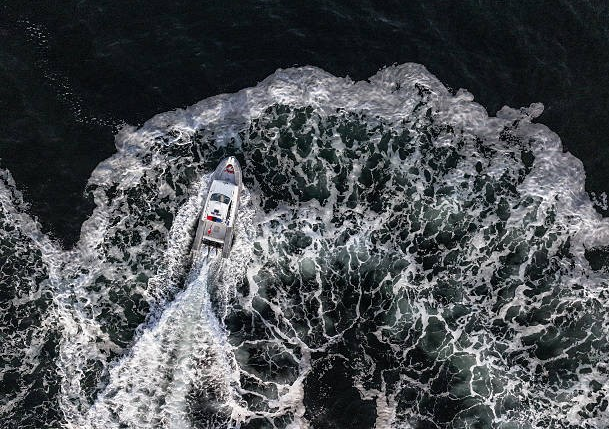
Large wakes and following seas can turn an otherwise comfortable ride into a situation that demands quick judgment and precise boat handling. The challenge is not simply getting through rough water. It is knowing how speed, angle, trim, spacing, and timing affect the way your boat responds.
So, let’s understand the right approach ahead of time to gain better control in times of uncertainty. This article looks at the practical boating lessons that help you maintain better control, protect passenger comfort, and respond more confidently when wakes and following seas become part of the trip.
In this article
Key Takeaways
- Study several waves before choosing a crossing angle.
- Reduce speed before reaching a wake, not on top of it.
- Use small throttle changes to preserve steering control.
- Prevent the following seas from pushing the stern sideways.
- Prepare passengers and loose equipment before conditions worsen.
7 Boating Lessons for Crossing Large Wakes and Following Seas with Confident Control
-
Read Several Waves First
Reading the wave pattern means observing the direction, height, spacing, and shape of several waves rather than reacting to the first crest. One dramatic wake rarely tells the full story because another, steeper wave may be following close behind.
 Also readCould the Right Bathroom Vanities in Lawrence IN Make Your Bathroom More Functional?
Watch how quickly each crest arrives and whether the waves are spreading out or stacking together. Closely spaced wakes often create sharper impacts because the bow has little time to settle between them. A longer gap usually provides more room to recover and reset the boat’s position.
These boating lessons work best when the water is treated as a moving sequence rather than a single obstacle. A few extra seconds of observation can reveal the smoothest crossing point.
What Matters: Read at least three approaching crests before making a major speed or course adjustment.
-
Choose a Softer Angle
A softer angle means approaching a large wake diagonally instead of meeting it directly across the entire bow. This allows one side of the hull to rise first, reducing the flat, jarring impact that can occur during a square crossing.
An angle of roughly 30 to 45 degrees often provides a balanced starting point, although hull design, traffic, and available space should guide the final approach. Turning too far can expose the boat’s side to the wake and create uncomfortable rolling. The course should be established early, with speed reduced before the bow reaches the first upward slope.
Practical boating safety lessons help operators understand how different hull shapes respond, since a pontoon, center-console, and cruising boat will not behave exactly alike.
What Matters: Set the crossing angle early and avoid making a rushed turn when the wake is already beside the boat.
-
Adjust Power Before Impact
Throttle control is the careful use of engine power as the boat approaches, climbs, and leaves a wake. The goal is not simply to slow down. It is to maintain sufficient momentum to steer without allowing the bow to launch from the crest.
Reduce excessive speed while the boat is still on relatively level water. As the bow begins to rise, hold steady power rather than making a sudden throttle change. Once the crest passes beneath the hull, ease the power as needed to prevent the bow from driving hard into the trough.
Smooth throttle work is especially important during longer coastal passages, where professional boat transport may involve changing traffic patterns, unfamiliar waterways, and variable sea conditions.
What Matters: Make throttle changes early, gradually, and with enough power remaining to keep the steering responsive.
-
Protect the Stern Quarter
The stern quarter is the rear corner of the boat, where following seas can create a strong sideways push. When a wave lifts this area unevenly, the stern may slide while the bow swings in the opposite direction.
A modest angle to the waves can help reduce direct pressure on the transom when sea room allows. Steering corrections should begin as soon as the stern starts feeling light, not after the boat has already turned sharply. Small adjustments generally produce better control than large wheel movements.
These boating lessons are particularly useful because stern movement can feel subtle at first. Pressure may build through the wheel before any dramatic course change becomes visible, giving an attentive operator time to respond.
What Matters: Correct the first signs of stern movement rather than waiting for the boat to swing noticeably off course.
-
Match Speed with Spacing
Wave-matched speed means selecting a pace that allows the boat to move with the wave sequence rather than repeatedly crashing into it. This is particularly important when traveling in the same direction as the waves.
Excessive speed may cause the boat to run down the face of one wave and drive its bow into the back of the next. Moving too slowly may allow a following crest to catch the stern with greater force. Small speed adjustments can help the hull settle into a more predictable rise-and-fall pattern.
Experienced vessel transport services plan around this rhythm rather than forcing a fixed cruising speed through every condition. The safest pace may change several times as wave spacing, wind, traffic, or water depth changes.
What Matters: Look for a stable rhythm instead of trying to maintain one preferred speed regardless of the sea state.
-
Leave More Maneuvering Room
Maneuvering room is the open water available to change speed, adjust course, or avoid another vessel’s wake. In busy waterways, limited space can turn a manageable wake into a difficult crossing.
Avoid traveling too close behind large boats, especially near channels, bridges, marinas, or seawalls. Their wakes may reflect from hard surfaces, combine with other waves, or reach the boat at an unexpected angle. Greater separation provides time to judge the wake and choose a controlled response.
A reliable boat transport company should treat open space as an important safety resource rather than unused water. This becomes especially valuable near narrow inlets, congested approaches, and areas where several wake patterns may overlap.
What Matters: Extra distance creates extra decision time, and decision time is one of the strongest forms of control.
-
Prepare Everyone Beforehand
Passenger preparation is a short safety briefing given before the boat enters rough water or crosses a large wake. It helps prevent sudden movement, loss of balance, and distractions around the helm.
Passengers should sit in secure positions with their feet planted and hands on fixed supports. Coolers, bags, fishing equipment, and other loose items should also be secured before the first impact. A calm warning, such as “Large wake ahead, please stay seated,” gives everyone enough time to brace without creating alarm.
This preparation is especially useful during East Coast marine transport, where busy inlets, changing currents, and overlapping wakes can make conditions shift quickly. Clear communication allows the operator to focus on timing, steering, and throttle control.
What Matters: A calm ten-second briefing can protect balance, prevent injuries, and keep attention focused on the water ahead.
Final Thoughts
Large wakes and following seas become easier to manage when each response begins before the boat reaches the difficult water. Reading several crests, establishing a balanced angle, adjusting power early, and watching the stern all create valuable control.
Passenger preparation and sufficient maneuvering room complete the picture by reducing avoidable pressure at the helm. These boating lessons are not about pushing through every condition. They are about recognizing the boat’s limits, understanding the water’s rhythm, and making steady decisions while time and space are still available. A calmer approach usually produces a smoother ride and a safer experience for everyone aboard.
Build practical confidence for real-world conditions with Second Wind Boating and develop calmer, more controlled habits at the helm.
FAQs
Should a large wake be crossed head-on?
Not usually. A slight diagonal approach helps the hull absorb the wake more smoothly while maintaining better balance and steering control.
When should speed be reduced before crossing a wake?
Reduce speed before reaching the wake, then maintain steady throttle as the boat climbs and descends to avoid hard impacts.
Why are the following seas more difficult to handle?
Following seas can push the stern sideways and affect directional control, making early steering and throttle adjustments essential.
Is slower always safer in rough water?
No. The safest speed is one that matches the wave pattern while maintaining good steering response and overall boat stability.
When should professional boat transport be considered?
Professional transport is a smart option for long-distance moves, unfamiliar routes, larger vessels, or challenging coastal conditions where experience matters.
