
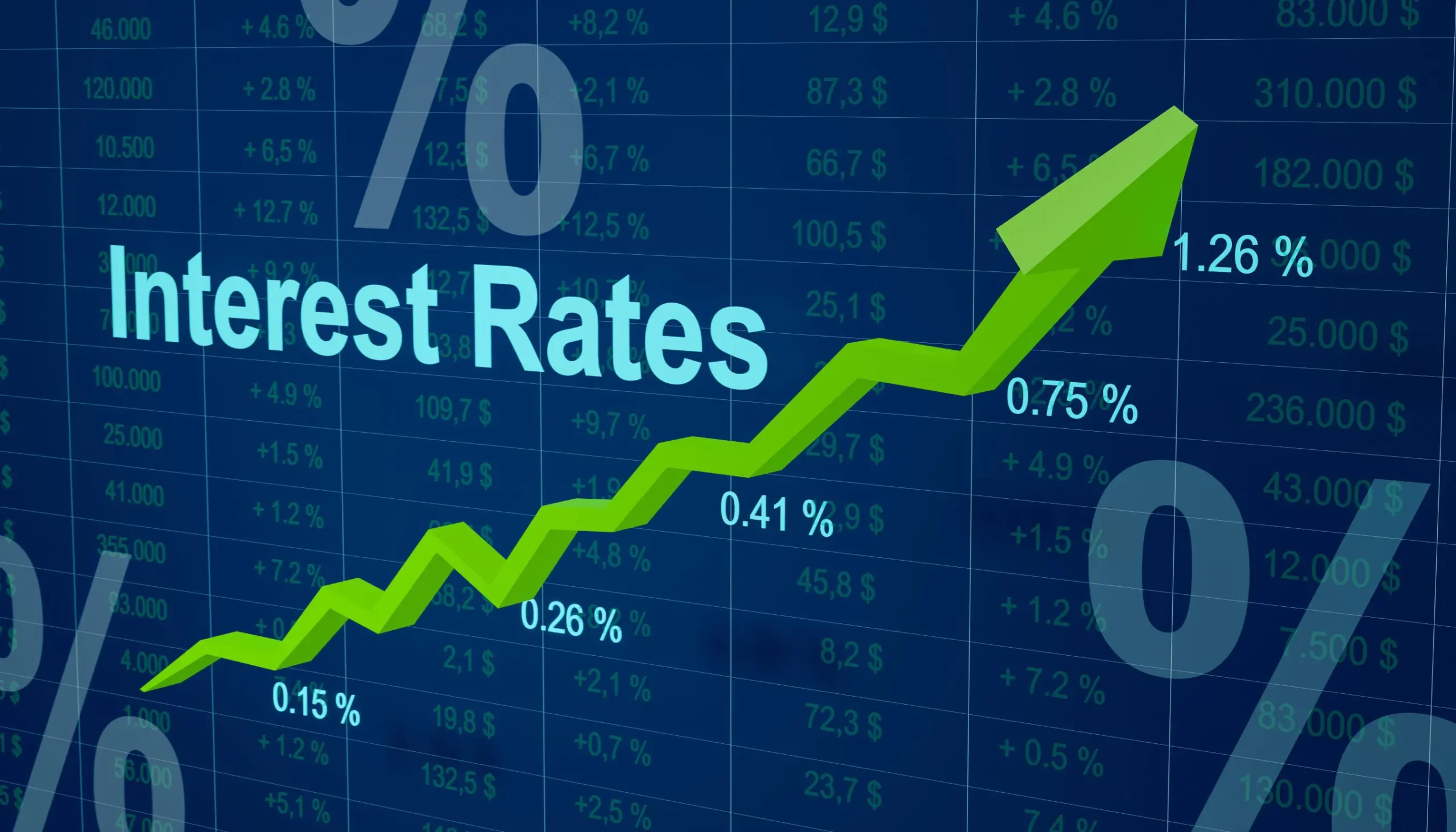
The modern economic landscape presents a complex web of challenges and opportunities for entrepreneurs. Among the most significant forces shaping the destiny of small and medium enterprises today is the fluctuating cost of borrowing money. The fundamental mechanisms of monetary policy have a direct, cascading impact on the viability of a business plan, the feasibility of expansion, and the daily operational calculus of managing cash flow. Understanding precisely how Rising Interest Rates Affect a company’s potential is not merely an academic exercise; it is a critical survival skill. The central banks adjust benchmark rates to manage inflation and stabilize the economy, but these adjustments reverberate through the financial system, altering the terrain under the feet of every business owner.
This reality creates a bifurcated environment where the strategic decisions made last year may no longer apply. Capital that was once cheap and abundant becomes scarce and expensive, forcing a reassessment of timelines and a rigorous examination of return on investment. The shift impacts not only the entrepreneur but also the consumer, whose purchasing power and confidence are equally sensitive to these macroeconomic adjustments. As debt servicing becomes more burdensome, the psychology of the marketplace shifts from aggressive growth to defensive consolidation. This analysis explores the multi-faceted ways that the cost of capital infiltrates the engine of entrepreneurship, examining the immediate financial implications, the long-term strategic pivots required, and the subtle behavioral changes that define a period of monetary tightening.
In this article
- The Direct Cost of Capital and Debt Servicing
- Stifling Capital Expenditure and Expansion Plans
- The Liquidity Squeeze and Cash Flow Constraints
- Erosion of Consumer Demand and Purchasing Power
- Suppression of Valuation and Equity Financing
- Tangible Impact on Physical and Commercial Real Estate
- The Ripple Effects on Supply Chains and Vendor Terms
- Strategic Pivots and Adaptation at the Firm Level
- The Psychological Burden and Long-Term Entrepreneurial Trauma
- Navigating the Future: Resilience Beyond the Rate Cycle
The Direct Cost of Capital and Debt Servicing
The most immediate channel through which Rising Interest Rates Affect a business is the increased price of borrowed funds. For many small enterprises, debt is not a luxury but a tool for smoothing out seasonal cash flow gaps, purchasing inventory, or bridging the gap between delivering a service and receiving payment. When a central bank raises its target rate, commercial banks follow suit, adjusting the prime rate that underpins variable-rate business loans and lines of credit. A loan that was comfortably serviced with a 5% interest margin can suddenly become a suffocating burden when the rate jumps to 8% or 9%. This arithmetic reality directly reduces net profit margins because the additional expense must be absorbed somewhere in the budget.
 Also readCould the Right Bathroom Vanities in Lawrence IN Make Your Bathroom More Functional?
This pressure is particularly acute for businesses carrying floating-rate debt. Unlike a fixed-rate term loan, which locks in a static payment schedule, lines of credit and variable-rate notes are susceptible to the volatility of the market. An entrepreneur may find that their monthly interest payment has increased by several hundred or even thousand dollars without any corresponding increase in revenue. This non-productive expense diverts funds away from value-creating activities like hiring essential staff, upgrading technology, or sponsoring community events. The burden of debt servicing climbs, and the ratio of debt to income deteriorates, making the balance sheet look weaker. For a business operating on thin margins, such as a local grocer or a family-run textile manufacturer, this specific manifestation of how Rising Interest Rates Affect liquidity can be fatal, converting a sustainable operation into a struggling one within a single fiscal quarter.
Furthermore, the criteria for qualifying for new loans tighten. Bankers become more risk-averse during cycles of monetary tightening, raising their internal credit score thresholds and demanding more collateral. This “credit crunch” effect means that even if a business owner is willing to pay the higher nominal rate, they may be denied the principal altogether. The lifeblood of expansion—cheap credit—is thus cut off, stifling plans for new locations, modern equipment, or bulk inventory purchases that could lower the cost of goods sold. The direct cost is, therefore, a dual-edged sword: existing obligations swell, and future capital evaporates, locking the enterprise into a stagnant pool of cash flow where every outgoing cent is scrutinized.
Stifling Capital Expenditure and Expansion Plans
Strategic growth is rarely organic in its purest form; it usually requires a catalyst of capital injection. The decision to open a second café, invest in a delivery fleet, or purchase a proprietary software license hinges on a mathematical calculation of return versus cost. When the hurdle rate for investment climbs due to higher borrowing costs, projects that looked promising under a low-rate paradigm are abruptly shelved. The core mechanism of how Rising Interest Rates Affect strategic expansion lies in the discount rate used to value future cash flows. As the risk-free rate climbs, the present value of tomorrow’s earnings shrinks, making long-duration payback projects financially unappealing.
This leads to a phenomenon of “capital abandonment,” where business owners delay or cancel upgrades. A local printing shop might decide to run its aging presses for another three years rather than financing a state-of-the-art digital system. A logistics startup might cancel plans to scale its fleet, choosing instead to outsource delivery to third parties, sacrificing margin control for balance sheet flexibility. This collective retreat from investment not only limits the growth trajectory of the individual firm but also dampens aggregate economic productivity. The supplier of the printing press loses a sale, the truck manufacturer idles a production line, and the cycle of stagnation reinforces itself.
The psychological barrier of the higher rate is often as powerful as the arithmetic reality. Entrepreneurs, facing an unpredictable market, develop a heightened preference for liquidity. The fear of being over-leveraged in a downturn causes them to hoard cash rather than deploy it. This “wait-and-see” approach freezes the expansion dynamic entirely. While financial prudence is wise, a systemic halt to capital expenditure can lead to a loss of competitive edge, particularly if international competitors operate in jurisdictions with more accommodative monetary policies. The distinction between surviving a storm and missing a market opportunity becomes blurred, and the business landscape risks ossifying as firms prioritize safety over strategic advancement.
The Liquidity Squeeze and Cash Flow Constraints
Beyond the cost of long-term loans, the tightening cycle exerts a suffocating pressure on short-term liquidity. Commercial credit cards, often used by small businesses for routine procurement and travel expenses, reprice instantly, eating into operating budgets. Trade credit—the informal loan extended by suppliers allowing payment 30, 60, or 90 days after delivery—also shrinks. Suppliers, facing their own rising carrying costs, shorten payment windows and offer steeper discounts for immediate cash settlement, penalizing buyers who need to delay outflows. This systemic tension is a critical illustration of how Rising Interest Rates Affect the circulatory system of commerce. The velocity of money slows as businesses stretch payables and accelerate receivables, a dynamic that often culminates in a chain of late payments that stresses the weakest links in the supply chain.
For a small manufacturing business, the need to pay for raw materials upfront, before the finished goods are sold to a retailer who demands 90-day payment terms, creates a “working capital gap.” This gap was traditionally filled by a revolving bank line of credit. As the cost of that line of credit rises, and the availability shrinks, the gap becomes a chasm. The business owner must decide between turning away profitable orders due to a lack of liquidity or diving into high-cost alternative financing that decimates the profit margin on the very order they are trying to fill. It is a paradoxical trap where demand exists, and the operational capacity is available, but the financial intermediary cost makes fulfillment unsustainable. This cash flow whiplash is often cited by entrepreneurs as a more immediate threat than a lack of sales, revealing that how Rising Interest Rates Affect transaction mechanics is just as vital as their impact on demand.
Moreover, the concept of “float”—the time value of money held between receipt and disbursement—evaporates. In a high-rate environment, holding idle cash in a non-interest-bearing checking account becomes a distinct opportunity cost. Business owners are pressed to micro-manage their treasury functions, maximizing returns on every spare dollar. This administrative burden distracts from core business functions like product development and customer relationship management. The financialization of the small business operation, where the owner becomes a portfolio manager obsessing over overnight sweep accounts rather than a visionary entrepreneur, represents a subtle yet profound loss of human capital efficiency.
Erosion of Consumer Demand and Purchasing Power
A business does not operate in a vacuum; its prosperity is inextricably linked to the financial health of its customer base. The central bank’s campaign to cool inflation by raising rates works precisely by suppressing demand. Mortgage payments swell for homeowners with variable-rate contracts. Car loans become prohibitive, cooling the automotive market. Credit card minimum payments spike, absorbing discretionary income that was previously directed at restaurants, boutiques, and entertainment venues. This broad-based compression of household budgets is the ultimate channel through which Rising Interest Rates Affect small business top lines. The market shrinks not because of a shift in taste, but because of a mathematical reduction in available money.
For businesses positioned as discretionary or luxury—a category that broadly spans from premium bakeries to boutique fitness studios—the contraction can be severe. Consumers engage in “trade-down” behavior, switching from premium brands to generic alternatives, or simply abstaining from non-essential purchases. A family that once ordered weekly meal kits may revert to bulk grocery shopping; a couple that frequented live music venues may switch to free parks. The elasticity of demand, sharpened by economic anxiety, punishes businesses that lack an essential value proposition. Service-based businesses, too, suffer as households delay elective maintenance, landscaping, or tutoring, viewing these outlays not as investments but as deferrable expenses. This demand-side collapse often hits harder than the supply-side cost increases because no amount of operational leverage can compensate for a missing client.
The psychology of the consumer undergoes a measurable shift toward “precautionary saving.” The future looks uncertain; headlines warn of potential recessions. In response, individuals hoard cash just as businesses do, creating a self-fulfilling prophecy of economic slowdown. The small business owner faces a crisis of confidence that no marketing campaign can easily cure. Advertising costs, while potentially softening due to lower demand for ad space, cannot engineer a transaction when the target audience has simply zipped their wallet shut. The mechanism of how Rising Interest Rates Affect consumer confidence is thus a delayed but devastating blow to the local coffee shop, the independent fashion designer, and the corner bookstore.
Suppression of Valuation and Equity Financing
Not all growth funding comes from bank debt. Many small and emerging businesses rely on private equity, venture capital, angel investors, or even friends and family rounds. The valuation of a small business, particularly in the technology or high-growth sector, is highly sensitive to the interest rate environment. As rates climb, the “risk-free rate of return” offered by government bonds becomes more attractive. Why would an investor risk capital in a volatile startup promising a 15% internal rate of return when a government bond offers a guaranteed 7% or 8% with negligible risk? This compression of the risk premium forces down the present value of all future profits. The phenomenon vividly demonstrates how Rising Interest Rates Affect the wealth-effect psychology of equity investors.
For a business seeking to sell a minority stake to fund a growth spurt, a lower valuation means they must give away a larger percentage of their company to raise the same amount of money. This dilution can be so severe that it kills the deal’s economics for the founder, leading them to reject investment and remain sub-scale. The “down round”—where a company raises money at a lower valuation than its previous funding round—becomes common, creating a cycle of negative sentiment. Furthermore, venture capital funds, which rely on limited partners like pension funds and endowments, find their capital flows shrinking as institutional investors reallocate towards fixed-income assets. The “dry powder” available for deployment in the small business ecosystem dwindles, creating a polarizing environment where only the most exceptional firms with clear paths to profitability can secure any funding at all.
This extends to the exit strategy of long-term owners. A small business operator planning to retire and sell the firm to a private buyer or a family office faces a significantly reduced pool of bidders. The buyers who remain use leveraged buyout models, but when the cost of the loan to acquire the business rises, the price they can afford to pay drops proportionally. A manufacturing business that could have fetched a multiple of seven times EBITDA under a low-rate regime might now only command four or five times. This compression of exit valuations locks founders into their businesses longer than planned, leading to operational fatigue and deferred succession planning. The drain on entrepreneurial vitality in this context is a long-term scarring effect of prolonged monetary tightening.
Tangible Impact on Physical and Commercial Real Estate
For a vast swath of small businesses—retailers, medical offices, fitness centers, and restaurants—the physical location is the stage upon which the entire operation unfolds. The commercial real estate sector is notoriously sensitive to interest rate shifts. Landlords, who typically finance property acquisitions and refinancing with floating-rate debt, face immediate increases in their own carrying costs. These costs are invariably passed down to the tenants. A lease renewal negotiation that occurs during a tightening cycle often involves a brutal shock of “market rate adjustment.” This burden is a significant structural vector of how Rising Interest Rates Affect the fixed-cost base of a location-dependent enterprise. The triple-net lease, where tenants pay a share of property taxes, insurance, and maintenance, becomes a vector for unpredictable spikes as the landlord’s capital costs surge.
The decision to invest in leasehold improvements—the lifeblood of a hospitality or retail aesthetic—is also paralyzed. A dentist wishing to upgrade a waiting room, or a restaurateur needing a new refrigeration system, often finances these fixed-asset investments. The high cost of equipment financing delays these upgrades, leading to a gradual decline in the quality of the customer experience. Furthermore, the alternative to leasing—purchasing a commercial condo or a building—slips entirely out of reach. The Small Business Administration (SBA) loan programs, such as the 504 loan designed for fixed-asset acquisition, see their effective rates rise, killing the debt-service-coverage ratios required for approval. The entrepreneur remains trapped as a renter, exposed to the perpetual whims of the landlord class, unable to build equity in the real estate that houses their life’s work. The lack of property ownership is one of the most under-reported long-term costs of a high-rate environment, as it prevents business families from diversifying their wealth into hard assets that can serve as a retirement anchor.
Simultaneously, mortgage financing for home-based businesses or small-scale real estate investors dries up. The “house hacking” strategy—buying a multi-unit property, living in one, and renting the others—becomes mathematically unviable as the cap rates compress relative to mortgage payments. This blocks a traditional entry path into entrepreneurship for first-generation business owners who rely on real estate to subsidize their initial capital needs. The friction in the real estate market thus creates a high barrier to entry, cooling the churn of new business formation that a dynamic economy requires. The structural link between the physical space and the cost of money reminds us that abstract monetary policy eventually settles as a very concrete monthly rent check.
The Ripple Effects on Supply Chains and Vendor Terms
The intricate web of interactions between a small business and its suppliers undergoes a seismic shift during periods of rising rates. The supplier, often a larger entity with sophisticated treasury operations, begins to enforce payment terms with ruthless efficiency to protect its own balance sheet. For the small buyer accustomed to a relaxed grace period, the sudden enforcement of “Net 15” instead of “Net 30” creates a liquidity crisis. This is a potent example of how Rising Interest Rates Affect the relationship dynamics within a supply chain. The financial asymmetry means that large corporations effectively borrow money from their small vendors by delaying payments, using them as a cost-free bank. When money is expensive, this exploitation intensifies rather than abates, as the large firm’s incentive to stretch payables grows exactly at the moment the small firm’s capacity to absorb the delay collapses.
The cost of inventory itself is recalibrated. Commodities, which form the basis of many production inputs (from wheat for a bakery to cotton for a fabric shop), are often traded in global markets where the cost of carry includes storage and financing charges. As global interest rates climb, the financial speculation in commodity markets often increases volatility, and the cost to hold physical inventory rises. A business that practices “just-in-case” inventory management, holding large safety stocks to protect against demand spikes, finds that strategy penalized by the accounting math of carrying costs. Conversely, switching to a “just-in-time” model increases vulnerability to shipping delays, creating a no-win scenario. The business owner navigates an environment where the cost of holding a widget on a shelf is visibly rising against the risk of losing a sale due to a stock-out.
There is also a crisis of trust and credit reporting during these cycles. As smaller firms struggle to pay on time under the new, stricter terms, their credit ratings with trade bureaus suffer. A downgraded trade credit score cascades into even stricter terms or requirements for cash-on-delivery, accelerating the downward spiral toward illiquidity. This “credit contagion” spreads through networks, where the failure of one key intermediary in a supply chain can lock up the working capital of dozens of interconnected firms. What begins as a technical adjustment of a basis point at the central bank meeting translates into a physical shortage of parts in a workshop, revealing the hyper-connected, fragile reality of modern commerce.
Strategic Pivots and Adaptation at the Firm Level
Not all impacts are narratives of pure destruction. The constraint of a tight monetary environment often forces a discipline that low-rate environments mask. Slack operations, superfluous marketing spending, and unproductive nepotism are stripped away when every expense line is measured against a higher cost of capital. Business owners begin a forensic audit of their operations, identifying “zombie” projects that consume cash without generating returns. The essential truth of how Rising Interest Rates Affect organizational efficiency is that they act as a Darwinian forcing mechanism. The focus shifts from chasing vanity metrics like “top-line revenue” to harvesting “bottom-line profit.”
This pivot often involves a return to core competencies. A small tech firm might cease developing speculative side-software with no immediate buyer and double down on servicing its core legacy contracts with premium white-glove service, ensuring retention of high-margin recurring revenue. Restaurants re-engineer menus to focus on high-turnover, low-waste items that simplify the supply chain. Marketing budgets are reallocated from broad, expensive brand-awareness campaigns to hyper-targeted, performance-based direct response advertising where the return on investment can be tracked with precision down to the last penny. This shift to a “fortress balance sheet” mentality is a survival response, but it frequently cultivates a leaner, more resilient business model that persists long after the interest rate cycle turns.
Furthermore, this environment sparks innovation in non-debt financing and barter economies. B2B partnerships flourish where services are traded instead of sold for cash. A web designer might build a site for a local accountant in exchange for tax preparation services, entirely circumventing the cash and credit system. Leasing and subscription models for equipment (“Equipment-as-a-Service”) become more attractive as they convert capital expenditure into operational expenditure, keeping debt off the books. This shift toward a service-oriented economy within the B2B space illustrates the adaptive ingenuity of small business owners who, when blocked from traditional leverage, invent new methods of exchange that keep the engine of commerce running.
The Psychological Burden and Long-Term Entrepreneurial Trauma
The narrative of the balance sheet and the interest rate graph omits the human factor: the emotional resilience of the proprietor. Running a small enterprise during a period where monetary forces are actively hostile is a profoundly isolating experience. The psychological toll of failing to make payroll due to a sudden credit squeeze cannot be captured in monetary aggregates. The reality of how Rising Interest Rates Affect mental well-being is an emerging field of concern. The stress of renegotiating with creditors, laying off loyal staff to meet debt service ratios, and watching a lifetime of sweat equity erode in valuation trauma leaves lasting scars on the entrepreneurial community. This “financial PTSD” can lead to a generation of business owners who are pathologically risk-averse, refusing to hire or invest even when conditions normalize.
This psychological dimension is compounded by the asymmetry of information. Central bankers communicate in a specialized jargon of “hawkish pauses” and “quantitative tightening.” Small business owners, often deeply skilled in their craft but not in macroeconomics, feel buffeted by forces they cannot control and only dimly understand. The sense of agency diminishes. The optimism that drives job creation and community sponsorship—the belief that the future can be better than the past—is replaced by a grim defensive crouch. The social capital of the marketplace, the handshake deals and the informal credit lines between neighboring businesses, fray under the strain. The emotional infrastructure of the economy, built on trust and the expectation of fair dealing, takes years to mend.
This trauma is exacerbated by the media cycle, which fixates on “doom loops” and recessionary warnings. Consumer sentiment freezes, and business investment grinds to a halt, not just because of the reality of 8% rates, but because of the fear that they might go to 10%. The management of sentiment becomes a critical, though untaught, skill for the business leader. They must maintain the morale of their internal team, reassure their suppliers, and signal strength to clients, even while privately wrestling with cash flow projections that keep them awake at night. The invisible cost of this emotional labor is a major output of monetary instability, proving that the impact transcends the strictly financial.
Navigating the Future: Resilience Beyond the Rate Cycle
Despite the catalogue of constraints, the small business sector possesses a unique regenerative capacity. The strategies forged in the fire of a high-rate environment often create a durable competitive advantage. This perspective suggests that the full story of how Rising Interest Rates Affect an enterprise’s lifecycle may be a narrative of transformation rather than terminal decline. The focus shifts irrevocably to customer loyalty over customer acquisition cost. Retention metrics, Net Promoter Scores, and lifetime value become the guiding stars, replacing the hollow chase for volume. A loyal customer base that pays on time provides the internal financing—through immediate cash flow—that a bank refuses to extend.
The path forward involves an embrace of radical financial transparency and scenario planning. The forward-thinking entrepreneur maps out a “base case,” a “worsening case,” and a “worst case” for interest expenses, integrating these variables deeply into the pricing of their products. They pursue dynamic pricing models where feasible, ensuring that the cost of capital is automatically reflected in the output price, preventing margin erosion. Moreover, they actively manage relationships with bankers long before a crisis hits, providing unaudited financial statements and cash flow projections regularly to build trust and lock in credit lines during the “calm” before the storm hits.
Investment in automation and efficiency, which requires upfront capital but saves long-term labor costs, becomes a delicate calculation, but one that usually pays off. A small manufacturer might justify a robotic arm not because the bank offered a cheap loan, but because the robotic arm reduces the reliance on a fickle labor market and volatile working capital to meet payroll. This shift from a labor-heavy model to a capital-tech hybrid changes the risk profile of the firm, making it less sensitive to the next credit squeeze. The business emerges with a flatter organizational structure, lower breakeven points, and a cash conversion cycle that is the envy of its leveraged competitors. The ultimate lesson is that while monetary policy sets the weather, the entrepreneur must build the house—and the houses built in a storm, with deep foundations and tight seals, are the ones that stand for generations.
The reality of monetary tightening is, at its core, a grand re-pricing of risk. It forces a reckoning with bad models and lazy assumptions. It punishes the unprepared and rewards the prudent. The small business sector, always a barometer of national economic health, absorbs this shock viscerally, translating the abstract policy of the central bank into the concrete reality of a signed paycheck or a canceled lease. By understanding the transmission channels—from debt servicing and consumer wallets to supply chain credit and psychological morale—the business community can prepare a defense. The long-term perspective confirms that capital cycles ebb and flow, but the enterprise that internalizes the discipline of high rates during the lean times will be uniquely positioned to soar when the credit windows inevitably open again, unrestrained and fortified by the survival of the tightest squeeze.
