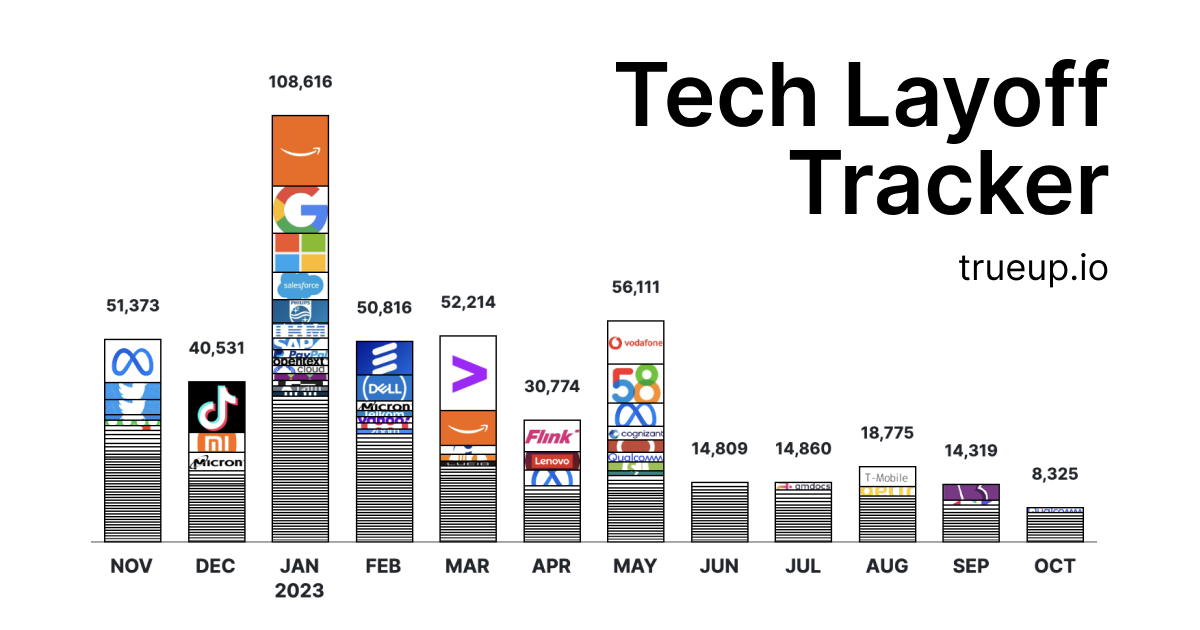
The modern technology sector presents a fascinating contradiction. Headlines scream of record-breaking quarterly earnings, soaring stock prices, and unprecedented market capitalization. Simultaneously, those same headlines are filled with notifications of mass workforce reductions. It is a dissonance that confuses the public, frustrates workers, and reshapes the global employment landscape. We are witnessing a historic shift where a company can announce billions in profit and, in the same breath, tell thousands of skilled professionals they no longer have a job. This phenomenon is not a sign of corporate collapse but a calculated, deliberate restructuring of the industry’s DNA.
For decades, the standard equation was simple. A company’s success was measured by its headcount growth. More revenue meant hiring more people. To be a tech giant meant to be a massive employer, hoarding the brightest minds not just to build products, but to keep them away from competitors. The campus, the free meals, the lavish perks—these were symbols of a war for talent where victory was defined by accumulation. Today, that equation has been shattered and rewritten. The new measure of success on Wall Street is not the size of the army, but the efficiency of the machine. This is the core of the paradox: Why are Tech Companies Laying Off Employees when the money has never been better? The answer lies deep within a complex web of investor pressure, artificial intelligence maturation, strategic pivoting, and a fundamental psychological reset in executive leadership that we now call the post-pandemic efficiency mandate.
The Great Overcorrection: A Pandemic Hangover
To understand the current bloodletting, one must look back at the anomalous years of 2020 and 2021. The pandemic era was a time of distorted reality, particularly for the digital realm. As the physical world locked down, life migrated online at a velocity never seen before. It was a gold rush for technology platforms. E-commerce exploded, remote work tools became utilities, and digital entertainment consumption went parabolic. Tech companies interpreted this surge not as a temporary spike caused by extreme circumstances, but as a permanent acceleration of the digital future. They hired with a frenzy that bordered on reckless. Recruiters were given impossible targets, salaries inflated to absurd levels, and teams were built in anticipation of a growth curve that extended infinitely upward.
This was the zero-interest-rate phenomenon in full effect. Cheap money allowed for moonshots, speculative projects, and a philosophy of growth at all costs. Profitability was a secondary concern to market capture. When the world reopened and the economic climate shifted with rising interest rates, the hangover was brutal. The permanent acceleration turned out to be a pull-forward of demand. People returned to physical stores, travel, and offline experiences. The advertising market, the lifeblood of many platforms, contracted. Suddenly, companies realized their physical bodies—their payrolls—were too large for the post-pandemic reality. The layoffs that began in late 2022 were not the start of a recession-driven collapse; they were the painful correction of a historic miscalculation. Executives admitted, often behind closed doors, that they had over-hired by tens of thousands. The current wave of Tech Companies Laying Off Employees is, in many ways, the final chapter of that sobering recalibration.
The Wall Street Coronation: Efficiency as the New Growth
There has been a seismic shift in the symbiotic relationship between Silicon Valley and Wall Street. For a decade, investors rewarded moonshots. They funded losses, cheered on user growth, and worshipped the visionary founder who promised to colonize the future. Profit was a problem for tomorrow. Today, that patience has evaporated. The era of cheap capital is dead, replaced by a rigid discipline that prioritizes profit margins above all else. The kingmakers in hedge funds and institutional investment firms have found a new word to bless: efficiency. They are no longer seduced purely by top-line revenue growth; they are coronating the companies that can do more with less.
This is the financial theater driving the paradox of record profits and job cuts. When a tech giant announces a reduction in force, the most revealing reaction is not on LinkedIn, but on the stock ticker. Historically, the market cheers these decisions. A layoff announcement is often followed by a spike in share price. This is because the market views headcount as a liability to be managed, not an asset to be cherished. The metric that matters most is revenue per employee, and layoffs are the fastest lever to pull to artificially inflate this number. By slashing payroll, a company instantly lowers its operating expenses, causing net income to skyrocket in the next quarterly report. The record profits that make headlines are frequently a direct result of the layoffs themselves. It is a closed loop of capital creation. The company fires its workers, the balance sheet strengthens, the stock rises, the executives’ stock-based compensation multiplies, and the pressure from investors to maintain that lean profile intensifies. This vicious cycle perfectly explains why Tech Companies Laying Off Employees and record profits coexist; the latter is often manufactured by the former.
The AI Reckoning: Automating the White-Collar Worker
Beneath the financial engineering lies a technological revolution that is fundamentally redefining the value of human labor. Artificial intelligence is no longer a research project; it is a senior engineer, a copywriter, a coder, and an analyst. The dawn of Generative AI represents the most profound disruption to white-collar work in history. This is not just about automating the factory floor; it is about automating the creative and cognitive processes that justify six-figure salaries. If the pandemic over-hiring was the initial spark, AI is the long-term structural fire that is consuming jobs that will never return.
Historically, automation hit manual labor first. Now, it’s coming for the knowledge worker with surgical precision. A software developer with a generative AI copilot is demonstrably more productive, cutting coding time by a significant fraction. Customer service roles are being replaced by hyper-realistic conversational agents. Marketing copy, which once required a creative team, can be drafted, iterated, and personalized by algorithms in seconds. When Satya Nadella or Sundar Pichai steps on stage to justify layoffs, they speak in the coded language of “reallocating resources towards the AI opportunity.” This translates to a grim reality: the investment in AI infrastructure—the chips, the data centers, the electricity—requires a massive redistribution of capital. That capital is being extracted from the payroll of the human workforce. It is a strategic trade-off. A company isn’t just cutting costs; it’s actively starving its legacy human-run operations to feed the massive financial appetite of its AI division. In this context, the phrase Tech Companies Laying Off Employees becomes synonymous with a species-level shift in the demand for human cognition. They are not just shrinking; they are metamorphosing into capital-intensive, algorithmic entities.
The Camouflage of Strategic Reorganization
The language of corporate announcements is carefully sanitized to obscure the human cost. No CEO sends a memo saying, “We are firing 12,000 people to boost our stock price.” Instead, the workforce reduction is wrapped in the sterile packaging of a “strategic reorganization” or a “restructuring to flatten the org chart.” This language serves a dual purpose: it soothes investor anxiety about instability while providing a legal and public relations shield. However, beneath the jargon lies the painful reality of middle management annihilation and the dismantling of “moonshot” projects.
The flattening of the corporate hierarchy is a direct assault on middle management. For years, the tech industry bloated the middle layers with highly paid directors and managers whose primary function became managing other managers rather than producing work. The efficiency crusade has identified this layer as a primary source of financial drag. By removing layers, companies claim they improve information velocity and execution speed. Simultaneously, the zero-interest-rate era spawned countless speculative projects—futuristic hardware labs, alternate reality initiatives, or experimental service divisions—that generated zero revenue. These “other bets” were the first to face the guillotine when the cultural mandate shifted from exploration to extraction. The company isn’t failing; it’s pruning branches to save the main tree. This pruning is the operational reality behind the sterile press release. The phrase Tech Companies Laying Off Employees is often a euphemism for the death of a specific dream inside a corporation, a quiet admission that the future is not as expansive as they once believed.
The Psychological Cascade: The Copycat Theory
A widely debated, and somewhat cynical, interpretation of the current layoff wave points to a social contagion theory. This perspective suggests that economic fundamentals alone cannot fully explain the synchronized timing and scale of the reductions across an industry that remains immensely profitable. Instead, a herd mentality has taken hold among the C-suite, where a layoff announcement has become a signal of strength to investors rather than a signal of distress. Once a market leader like Meta or Amazon dramatically cuts costs and is rewarded with a soaring market cap, the social pressure on other CEOs becomes immense.
“Why are we overpaying for talent if they are not?” becomes the logic. If a competitor fires 10% of its staff and their profit margin widens, a CEO who refrains from layoffs risks being labeled as “flabby,” “unserious,” or “lacking fiscal discipline” by activist investors. This creates a permission structure for cruelty. When an entire industry acts in lockstep, the stigma of letting people go evaporates. It becomes normalized. It’s no longer a personal tragedy for a poorly performing company; it’s a macro “trend.” Executives can hide in the crowd, citing “macroeconomic headwinds” while booking record-breaking financial tailwinds. This copycat dynamic transforms layoffs from a defensive necessity into an offensive business strategy. It is a dark feedback loop where the initial cut by a bold CEO resets the benchmark for the entire sector, triggering a cascade of imitators who fear being left behind in the relentless pursuit of margin expansion. It reveals that the trend of Tech Companies Laying Off Employees is as much about managing perception as it is about managing a balance sheet.
The Human Capital Restock: Firing to Rehire
To truly understand the paradox, one must look beyond the aggregate net headcount numbers. The narrative of mass unemployment is often oversimplified. Many of these tech giants are not simply shrinking their payrolls into oblivion; they are secretly restocking their human capital with a different species of worker. They are firing high-cost, experienced professionals in established markets like San Francisco, New York, or London, and simultaneously building massive new hubs in lower-cost geographies or pivoting entirely to contingent, precarious labor.
This is the geographic arbitrage of the modern workforce. A software engineer in Silicon Valley commanding a $400,000 total compensation package is being replaced by an equally skilled engineer in Bangalore, Warsaw, or Mexico City for a quarter of the cost. Furthermore, the nature of employment is shifting from permanent staff to a liquid workforce of contractors, freelancers, and gig workers who lack health benefits, equity, and job security. The company gets the same output without the fixed long-term liability on the balance sheet. Finally, there is the pivot in skills. A company may lay off 10,000 recruiters and marketing specialists but issue 5,000 offer letters to machine learning PhDs. From a distance, the workforce shrinks, but the composition shifts profoundly toward the automation of the future. The jobs lost are customer success and sales, the “soft” human interface roles; the jobs gained are the architects of the machines that will make those human interfaces obsolete. This churn is a strategic overhaul of the labor model, perfectly concealed by the static headline of an ongoing wave of job cuts.
The Death of the Loyalty Contract
The psychological contract between the knowledge worker and the technology corporation has been irreparably shattered. For a generation, ambitious graduates flocked to Silicon Valley with a belief in a mutualistic relationship. The deal was simple: you sacrifice your twenties and your health, dedicating eighty hours a week to the mission, and in exchange, the company will give you a world-class career, a sense of family, and ironclad safety. That deal is dead. The current trend has unmasked the raw, transactional nature of the relationship that was always hidden beneath the beanbag chairs and micro-kitchens.
Workers have been forced to learn a harsh lesson: they are a line item on an income statement. The language of “family” used in all-hands meetings rings hollow when that same company coldly terminates access to email systems in the middle of the night without a human conversation. This psychological reckoning is profound. It has given rise to concepts like “quiet quitting” and “acting your wage,” which are not acts of laziness but acts of emotional disengagement and self-preservation. The ambition to climb the corporate ladder internally is fading, replaced by a mercenary mindset where the only path to financial advancement is job-hopping. The talent hoarding of the past decade—where companies hired superstars simply to bench them—has completely inverted. Now, every role must justify its existence in real-time. This erosion of trust is the unseen cultural scar of the layoff era, a permanent shift in power dynamics that will take a generation to heal, if it ever does. The sheer volume of Tech Companies Laying Off Employees has fundamentally re-educated a generation on the illusion of corporate safety.
The Macroeconomic Mirage: Are We in a “Richcession”?
Traditional economic indicators suggest we are in a period of prosperity. GDP is up, unemployment rates hover near historic lows, and consumer spending remains resilient. Yet, the white-collar professional class is experiencing a vastly different reality. Economists have coined terms like “richcession” or “white-collar recession” to describe this bifurcation. The wave of cuts is concentrated among high-income knowledge workers, creating a strange dual economy where the service industry faces a labor shortage while the managerial class faces a surplus.
This is partly a result of the sector’s unique sensitivity to capital markets. When the Federal Reserve raises interest rates to fight inflation, it makes borrowing expensive. For tech companies reliant on debt to fund operations or growth, this directly impacts the net present value of their future earnings. Investors suddenly prefer profits today over speculative growth tomorrow. The “record profits” we celebrate are often just a paper representation of these adjusted expectations. Moreover, the tools of remote work that these companies pioneered are now the weapons of their own downsizing. If a job can be done from a living room in Boise, the company’s leadership swiftly realizes it can be done from a living room in a country with a significantly lower cost of living. The high-wage premium paid for a centralized, physical headquarters is being ruthlessly arbitraged away. This divergence shows that the trend of significant workforce changes in the digital sector is a localized, class-specific event, masked by the overall health of the broader, non-digital economy.
The Future of Work: Lean, Mean, and Automated
What does the technology organization of 2030 look like based on the current trajectory? It will be a structure that is unrecognizable from the sprawling campuses of 2019. The future is extreme leanness, powered by a constellation of artificial intelligence agents and a skeleton crew of highly specialized human curators. We are moving from a model of a software company that employs people, to a model of an AI company that supervises algorithms. The concept of the “solopreneur” or the one-person unicorn is becoming technically feasible as generative AI tools amplify a single creator’s output to the level of a small army.
The demand for generalized business roles—the “coordinators,” the “account managers,” the “strategists” who synthesize information—will plummet. These are precisely the roles that Large Language Models (LLMs) excel at automating. The human jobs that remain will be those of extremes: the creative visionary who directs the AI, and the highly tactile, physical technician who fixes the robotic infrastructure. The vast middle layer of knowledge work is facing an existential threat. In this landscape, the news of Tech Companies Laying Off Employees will transition from being a cyclical shock to a permanent structural feature of the industry. Growth will no longer correlate with headcount. Companies will proudly brag about their efficiency, showcasing how they can generate billions in revenue with fewer than a hundred employees. This is the ultimate realization of the “do more with less” mantra—a world where the machine is the product, the builder, and the support staff, and the human is merely the quality assurance inspector watching for errors.
Navigating the Chaos: Strategic Survival for Knowledge Workers
In an environment of structural fragility, the most dangerous career strategy is passivity. Clinging to a job and hoping to go unnoticed is no longer a safe harbor; it is the fast track to obsolescence. Survival in the modern digital workforce requires a radical shift in mindset—from being an employee to being a free agent managing a portfolio of skills. The worker must internalize the logic of the market and apply it to themselves with the same ruthlessness that corporations do.
First, the priority must be the financialization of one’s own life. With loyalty dead, the only reliable path to a salary increase is external mobility. Staying at a company for “culture” is a losing financial proposition. Treat jobs like venture capital projects—high risk, with an expectation of a high liquidity event in two to four years. Second, skill stacking becomes essential. The era of the pure specialist is dangerous. The only safety lies in being a “hybrid”—the programmer who understands psychology, the marketer who understands data engineering, the designer who understands the philosophical ethics of AI. The goal is to build a professional identity that is technically complex for AI to clone but broad enough to pivot across domains. Finally, and most critically, is the mastery of the algorithm itself. The safest place in a burning forest is the fire line. Workers must pivot their skills toward the tools of automation. Learning to orchestrate AI agents, manage machine learning pipelines, or prompt-engineer complex tasks makes an individual the manager of the machines, rather than the replacement for them. In the brutal calculus of the sector, it is better to be the architect of the layoffs than the object of them.
Conclusion: The Tyranny of the Ticker Symbol
The mass displacement of talent in the face of booming profits is not a bug in the capitalist system; it is the system’s final, unapologetic logic. The technology sector has completed its transition from a high-flying act of innovation to a mature, ruthlessly optimized industry governed by the tyranny of the ticker symbol. The record profits are the prize, and the human cost is the tax deduction. The trends we have analyzed—the over-hiring hangover, the Wall Street mandate for efficiency, the deployment of AI, and the psychological copycat dynamics—are not temporary gusts of wind. They are the permanent climate of the 21st-century knowledge economy.
The paradox of mass job cuts alongside soaring revenues resolves itself once we understand that in the eyes of the market, a company’s value is not measured by the lives it enriches, but by the margin it extracts. The trend of Tech Companies Laying Off Employees is the sound of an industry automating its own humanity out of the equation. Until the public markets learn to value stability, human capital development, and social resilience as much as they value earnings per share, this cycle will continue. The modern digital giant has proven it can thrive without a massive human core. The challenge for society now is to figure out what happens to the millions of cognitive workers who are being told, in the most transactional terms possible, that their services are no longer required by the machines they helped build. The era of bloat is over; the era of the minimum viable workforce has begun, and it is wearing the mask of infinite prosperity.