
The digital world is no longer just about faster chips or brighter screens. The real race is about building a device that understands you, anticipates your needs, and guards your privacy while doing it. Since its introduction, Apple’s personal intelligence system has been a quiet revolution, weaving machine learning into the fabric of daily tasks without making a fuss about it. But the coming year marks a significant leap. We are not just looking at minor updates; we are witnessing a fundamental shift in how the ecosystem interprets context, communicates, and connects across devices.
As the calendar moves toward the next major software cycle, the anticipation around the next generation of on-device processing is reaching a fever pitch. The focus is shifting from reactive commands to proactive, nuanced action. The true promise of a personal digital assistant is one that lives on your device, learns from your habits, and never shares your secrets. This is the vision that is crystallizing with the rollout of Apple Intelligence 2026. This is not a single feature; it is a layer woven into the operating system, silent, powerful, and profoundly personal. The updates coming to the platform will redefine how users interact with their photos, messages, emails, and even their memories. It is an ambitious attempt to bring context-aware computing to the masses, stripping away the complexity and keeping the humanity intact.
In this article
- The Core Philosophy: On-Device First, Uncompromising Privacy
- The Intelligent Lock Screen: A Living, Breathing Surface
- The Creative Canvas: Image Generation and Augmentation
- Mail and Messages: The Communication Synthesizer
- A Photographic Memory That Works: Photos App 3.0
- Siri’s New Identity: The Context Bridge
- The Living Journal and Reflection Prompts
- The Connected Home and Audio Experience
- Accessibility: The Silent Superpower
- The Developer’s Bridge: App Intents 2.0
- Conclusion: The Invisible Computer
The Core Philosophy: On-Device First, Uncompromising Privacy
Before diving into the specific new tools, it is essential to understand the engine that powers them. The philosophy has not changed, but the architecture has evolved. The 2026 strategy rests on a concept called “Hierarchical Context Processing.” This is a fancy way of saying that the system breaks down a request into layers of complexity.
 Also readAirPods Pro 3: Heart Rate & Fitness Tracking – Full Analysis
The first and simplest layer runs entirely on the device. This includes summarizing a notification, suggesting a reply, or organizing a photo album. The silicon inside the latest devices, specifically the Neural Engine, has grown so efficient that it handles these tasks without a flicker of battery drain. The second layer involves a more complex semantic understanding of your personal knowledge graph—the map of your relationships, habits, and routines. Even this stays locked on the device, encrypted and inaccessible to anyone but you.
The real breakthrough in Apple Intelligence 2026 is the third layer: Private Cloud Compute. Occasionally, a request is so complex that it requires larger models than can physically fit in a smartphone. When this happens, the system extends your device’s privacy bubble into the cloud. It creates an ephemeral, encrypted session on Apple Silicon servers. These servers process the request using your data, but they have no storage, no logging, and no way to retain the information after the task is done. It is like renting a secure, windowless room to think, then burning the room down after you leave. This is the foundation that allows the new features to feel magical without feeling invasive. This commitment allows features that competitors simply cannot offer with the same security guarantees.
The Intelligent Lock Screen: A Living, Breathing Surface
One of the most visible transformations is coming to the Lock Screen and Notification Center. For years, notifications have been a chronological log of interruptions. In the 2026 update, they become a prioritized, synthesized briefing, thanks to the new “Priority Intelligence” engine.
Real-Time Notification Synthesis
Instead of seeing five separate alerts from a group chat, a delivery app, and a calendar reminder, you will see a single, dynamically generated card. The system intelligently bundles them if they relate to the same event. For example, if you have a dinner reservation, you won’t see separate notifications for the calendar invite, the restaurant’s reminder text, and the map’s traffic alert. Instead, the Lock Screen will show a “Dinner Tonight” cluster. It will display the reservation time, the map’s ETA based on live traffic, and the latest message from your friend saying they are running late—all in one glanceable, fluid animation.
The “Reduce Interruptions” Evolution
The existing Focus modes are getting a massive upgrade. The new “Adaptive Shield” mode goes beyond whitelisting apps or people. It uses on-device context to gauge the urgency of a message. If you are in a Work Focus, and a family member texts “urgent call me,” the system understands the semantic urgency and lets it through, even if the family member isn’t on your VIP list. It differentiates between “Call me when you get a chance” and “Call me now.” This feature, powered entirely by the local engine, learns your stress patterns. It knows when you are typing furiously on a deadline and when you are casually browsing, adjusting the threshold for interruptions accordingly.
The Creative Canvas: Image Generation and Augmentation
Visual expression is undergoing a radical overhaul. The toolset informally known during development as “Image Playground” is maturing into a deeply integrated system service available across all native apps. This is not about creating deepfakes; it is about giving everyone a sketchpad that understands intent.
Native Sketcher in Notes and Freeform
The Notes app is now the most powerful visual thinking tool available. With the new Image Wand, you can make a rough circle in yellow and write “sun.” The device transforms that crude drawing into a polished watercolor or a photorealistic image, matching the style of the surrounding notes. But the true power comes in Freeform during brainstorming. Imagine writing “modular office pod with biophilic design” on a sticky note, circling it, and instantly having three concept options generated on the board for your team to discuss. Apple Intelligence 2026 turns the vague ideas in your head into tangible artifacts you can move around and iterate on.
Genmoji 2.0: The Hyper-Personal Avatar
Genmoji took the world by storm, but the 2026 version adds temporal and emotional continuity. You can now create a “Personal Persona” based on your photos. Once generated, this persona can be inserted into any scenario via text description. You can type “me celebrating a birthday in a rainy Paris street,” and it generates an image that looks consistently like you, not a generic cartoon. More importantly, these are not just static images. The system can generate “Reaction Sequences” in Messages. If you react with “Shocked,” the system generates a three-frame animation of your Genmoji persona gasping, complete with motion blur, ready to send as a sticker.
Camera Control as a Visual Search Engine
The physical Camera Control button introduced on recent hardware gains a new dimension. This is the launchpad for “Visual Context.” Point the camera at a restaurant storefront, and a subtle overlay appears, pulling in hours, menu highlights, and reservation links from Maps, without you taking a photo. Point it at a plant, and it identifies the species and tells you if it needs water based on the leaf’s color analysis. Point it at a complex diagram in a textbook, and it offers to clean it up and import it into Freeform as an editable vector. The camera stops being just a tool for recording memories and becomes a real-time interface for understanding the world.
Mail and Messages: The Communication Synthesizer
The way we communicate has become fragmented and overwhelming. We jump between Mail, Messages, and third-party apps, losing track of threads. The 2026 update introduces a unified concept: The Communication Stack.
Project Inbox in Mail
Mail is getting its most significant reorganization ever. Instead of chronological lists, your inbox is intelligently categorized into “Digests,” “Transactions,” “Personal,” and the new “Projects” category. The Projects category is the standout. It scans your emails and messages for threads related to a specific ongoing endeavor—say, planning a vacation or renovating a kitchen. It pulls in the flight confirmation from the travel agency, the receipt for the hotel deposit, the email about the pet sitter, and even the text messages where your partner sent you a link to a local tour. It packages these into a project view, showing you a timeline and a summary of the latest status. It knows who the key participants are, and it surfaces outstanding questions like, “You haven’t replied to the architect’s message about tile color yet.”
Smart Reply and Writing Tools Expansion
Smart Reply has evolved beyond simple options like “Yes” or “Sounds good.” The system now offers “Contextual Echo” suggestions. If you receive a long message detailing three questions, the Smart Reply panel doesn’t just give you a generic answer. It presents three separate one-tap replies, one for each question. The Writing Tools, accessible system-wide, now feature a “Compose” mode. You can be in a text field and prompt the system: “Write a message to the team explaining the budget delay, keeping it optimistic but honest.” The generated text matches your personal tone by learning from your previous sent messages. It adapts to whether you use em dashes—like this—or prefer parentheses. It is not just writing; it is ghostwriting for you.
The Priority Messages Algorithm
A new badge system appears in Messages, marking a thread as “Priority” only when the algorithm detects time-sensitive logistics. If your child’s school sends a standard newsletter, it stays muted. If a follow-up text comes five minutes later saying, “Parent pickup moved to Gate B due to a water leak,” it surfaces to the top with a distinct visual indicator. This is powered by the same urgency-detection model mentioned earlier, but trained specifically on logistical language patterns.
A Photographic Memory That Works: Photos App 3.0
The Photos app has billions of images locked inside it, but for most people, they are inaccessible because of poor organization. The newest iteration aims to solve the “I know I took that picture, but I can’t find it” problem with natural language precision.
Natural Language Video Scrubbing
Searching for photos is old news. Searching inside videos is the new frontier. With the 2026 update, you can search for “the moment the dolphin jumped out of the water on vacation.” The device scrubs the video timeline and drops a pin at the exact frame. It works for audio too. You can find “the clip where my dad is telling the story about the broken car.” This unlocks a massive trove of previously hidden memories. The processing happens on-device during idle charging time, indexing the semantic content of your entire library without uploading a frame.
The Clean Up Tool with Contextual Fill
The Clean Up tool is no longer just a smart eraser. It is a contextual restorer. When you remove an object from a photo, the space behind it is filled using a generative model that understands the scene’s three-dimensional geometry. If you remove a car from a street, it understands the perspective of the road and continues the texture of the asphalt and the curb correctly. But the 2026 version adds “Era Restoration.” If you have a faded, torn physical photo that you’ve digitized, the Clean Up tool in restoration mode can reconstruct the missing corners, remove the white crease lines, and restore the color palette to what it likely looked like based on the photographic chemistry of the era the photo was taken in.
Siri’s New Identity: The Context Bridge
The most profound change is happening to the voice interface. This is the engine that ties all the other features together. The update completely sheds the old database-lookup architecture for a dynamic intent system.
On-Screen Awareness 2.0
Previously, awareness was limited to a few app domains. Now, it is systemic. You can be looking at a text from a friend suggesting a song, and simply say, “Play this.” The system bridges the gap between the text on the screen and the Music app. You can look at a contact card and say, “Facetime him,” or glance at a photo and say, “Send this to the family group.” The interface becomes porous; the rigid boundaries between apps dissolve. The system uses optical character recognition and image segmentation in real-time on the rendered screen buffer to understand what “this” refers to.
Personal Context and Semantic Indexing
This is the feature that makes the assistant truly personal. The device indexes everything it sees: messages, emails, calendar events, files, and even scanned documents in Notes. You can issue commands that span these silos. “Find the documents about the legal trust that my brother sent me last spring” works. “Show me the pictures of the red velvet cake recipe that my aunt left in a note” works. It understands familial relationships by analyzing your contacts and conversation patterns, building a private “knowledge graph” on the device. This graph allows for queries like, “When is the anniversary of the couple I photographed at the beach last fall?” It cross-references the photo’s metadata, the location of the beach, and any text messages around that date that mention an “anniversary” to surface the correct calendar entry.
The New Visual Design
The interface is no longer a spinning orb. It is a luminous edge of light that wraps around the perimeter of the screen. This serves a functional purpose. When Siri is listening, the light pulses slowly, indicating deep contemplation of your personal context. When it processes a simple command, the light races. This provides a non-intrusive, ambient feedback loop about the cognitive load of your request.
The Living Journal and Reflection Prompts
The Journal app, which launched as a simple reflection tool, becomes a proactive life-logging partner, blending passive data with active curation.
Multi-Modal Entry Suggestions
The suggestions API is much richer. It notices a pattern: you went for a run, then you took a photo of a smoothie, and you listened to a specific upbeat playlist. It groups these three events and suggests a single entry titled “Morning Energy.” It prompts you not just with text, but with the playlist you were listening to, asking, “What was on your mind during this run?” It pre-attaches the route map and the photo. The experience shifts from writing a diary to answering intimate questions about moments the device has quietly detected as meaningful.
State of Mind Integration
Health is a critical pillar of the ecosystem. The Journal now collaborates with the Health app to correlate your journaling language with your logged mood. If the device detects a pattern of anxious language in your writing and correlates it with late-night screen time or missed workouts, it doesn’t diagnose you. Instead, it gently nudges you. It might ask, “You’ve written about feeling overwhelmed lately. Would you like to schedule a wind-down focus earlier tomorrow?” It is a bridge between your emotional self-reporting and your behavioral data.
The Connected Home and Audio Experience
The home becomes the central stage for multi-agent audio intelligence. With the refresh of home devices expected around this software cycle, the audio features take a leap.
Conversation Awareness on Steroids
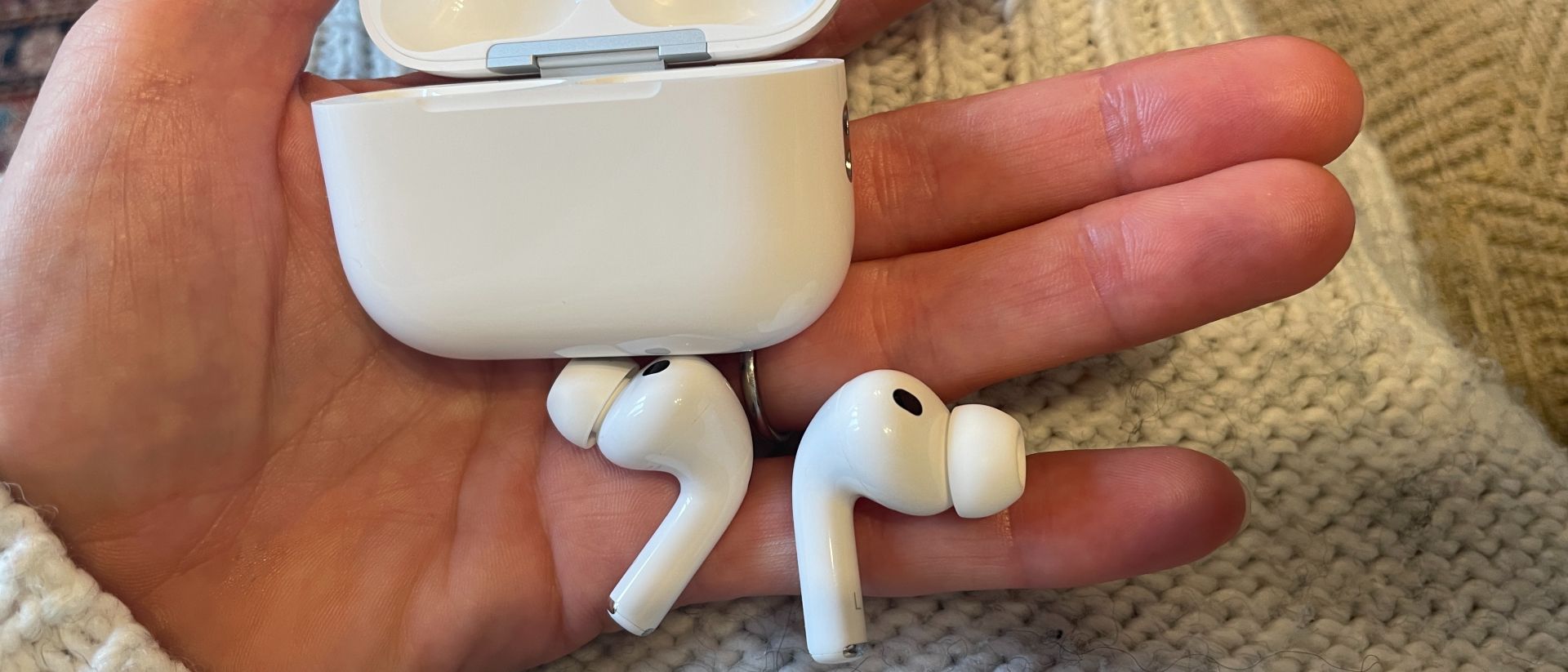
AirPods will gain a new mode tentatively called “Mental Clarity.” This is distinct from noise cancellation. Using machine learning, the buds analyze the ambient noise. If a construction drill starts, it cancels it. But if a person speaks your name, even from across the room, the system instantly dims your audio, pipes in the voice with clarity, and lowers the music volume. It creates a seamless audio reality where you are isolated from nuisance noise but perfectly tuned to human interaction.
Home Hub as a Vision Interpreter
The display-based home hub will feature a new “Recognition Zone.” When a person walks into the frame, the device reads not just their identity, but their activity. If it sees you holding a laundry basket, it reminds you that the cycle in the basement finished ten minutes ago. If it sees a child reaching for a high shelf, it sends an alert. This is contextual physical intelligence, translating visual cues into logical home automations without a single explicit command.
Accessibility: The Silent Superpower
Perhaps the most impressive work is being done in accessibility, where these technologies completely transform the experience for users with disabilities.
Personal Voice and Speech Accessibility
Personal Voice, which creates a synthesized voice that sounds like you, is now integrated into phone calls in real-time. Users who are at risk of losing their speech can type in a call, and their voice speaks the words on the other end with natural prosody and emotional inflection that matches the text. Furthermore, the “Point and Speak” feature in Magnifier merges with the new Visual Context engine. A visually impaired user can point a finger at a microwave keypad, and the device narrates exactly which button they are hovering over, giving them the confidence to cook independently.
Music Haptics and Sensory Augmentation
For those who are deaf or hard of hearing, Music Haptics is expanding. The Taptic Engine in the phone creates a nuanced, multi-layered vibration map of a song. In 2026, this synchronizes with smart home lights to create a full-room sensory interpretation of music, where the deep hums translate to a specific red warmth and the high strings translate to a cool, fast flicker. It translates audio art into a physical and visual language.
The Developer’s Bridge: App Intents 2.0
None of this stays within Apple’s apps. The App Intents framework is being thrown open wide. Developers can now define complex, multi-step intents that the system can chain together. A third-party photo editing app can define an intent like “Apply a vintage summer look.” Once defined, a user can ask Siri, “Edit the last photo I took with a vintage summer look in [Third-Party App],” and it happens without opening the app. Similarly, a recipe app can define a “start cooking” intent that triggers a specific step-by-step guide on the Lock Screen. This is the gateway to a true agent ecosystem where the assistant is the operating system’s linguistic bridge to every tool you own.
Conclusion: The Invisible Computer
The sum of these features points toward a single, clear future: the device as an extension of your own cognition. The new features in Apple Intelligence 2026 are not about technology for the sake of spectacle. They are about removing the friction between an idea and its execution. It is about moving from a world where we are tool operators, constantly swiping and tapping, to a world where the tool dissolves into the background.
This update is about the recognition that true intelligence is not just about answering questions, but about asking the right ones on your behalf. It is about the device noticing the photo you forgot to share with a loved one, the email you missed in a project thread, or the anxious pattern in your diary entries. The synthesis of on-device contextual awareness, personal knowledge graphs, and the Private Cloud Compute architecture represents the most sophisticated integration of machine learning into a consumer operating system.
The 2026 cycle makes a bold statement: you do not need to sacrifice privacy to have a deeply personal, intelligent assistant. The data stays yours. The intelligence serves you, not an advertising network. As these updates roll out across the iPhone, iPad, and Mac, users will slowly realize they are not holding a phone or a laptop; they are holding a mirror that reflects their own memory, creativity, and logic back at them, clearer and sharper than ever before. The era of the truly personal computer has begun. It does not live in a data center. It lives in your pocket, with your fingerprints all over it, and it whispers the answers only because it listened to the story of your life.
